
8 Critical Signs of a Bad Attorney in 2025 You Can’t Afford to Ignore
Are you getting the best legal help? Learn the top signs of a bad attorney and how to verify their competence with these actionable steps and warning signs.
Hiring an attorney is a critical step in protecting your rights after a motor vehicle accident, but not all legal representation is created equal. The wrong choice can transform your advocate into your biggest liability. A bad attorney can do more than just lose your case; they can cost you invaluable time, money, and peace of mind by missing crucial deadlines, drastically undervaluing your claim, and providing unethical or incompetent counsel. Recognizing the early warning signs is your best defense against such a catastrophic outcome.
These red flags are not minor inconveniences. They are direct indicators that your case might be in serious jeopardy and that you may be working with a subpar legal professional. Understanding these signals empowers you to take control before irreversible damage is done. This guide moves beyond gut feelings to provide a clear, data-driven framework for evaluating your legal counsel.
We will break down the 8 most critical signs of a bad attorney, providing actionable steps you can take to verify their competence and ensure your advocate is truly fighting for your best interests. You will learn how to look for concrete evidence, what probing questions to ask, and how to use public records and objective data from platforms like Verdictly to evaluate an attorney's actual track record. This information will help you move beyond promises and assess real performance, empowering you to make an informed decision when it matters most.
1. Lack of Transparency About Fees and Costs
One of the most immediate and significant signs of a bad attorney is ambiguity surrounding their fees and billing practices. A reputable lawyer will be upfront and clear about every potential cost associated with your case. Any hesitation, vague language, or outright refusal to provide a detailed written fee agreement is a major red flag that should not be ignored.
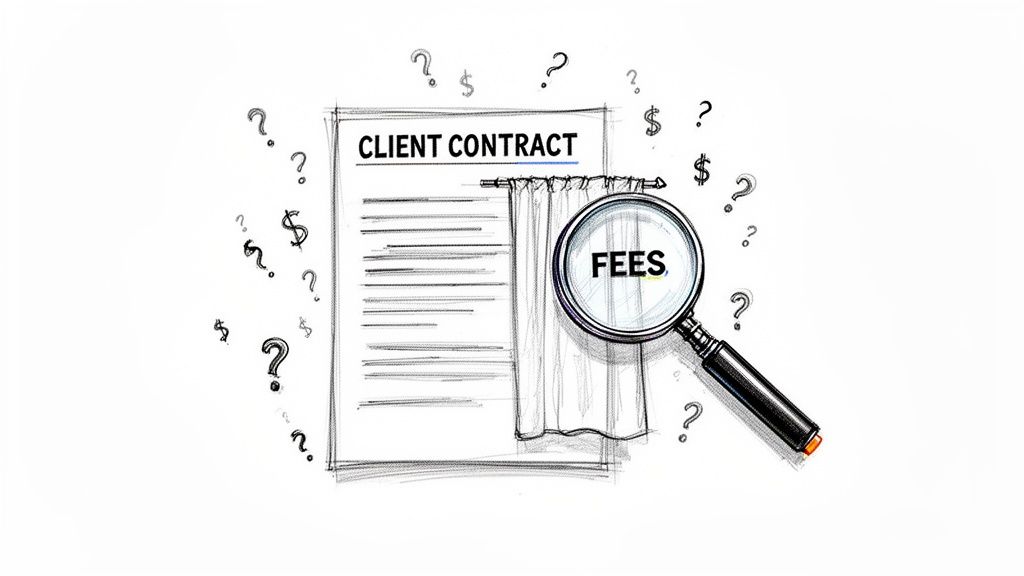
This issue is particularly critical in personal injury law, where contingency fees are the standard. The arrangement seems simple: the lawyer only gets paid if you win. However, the details within that arrangement can drastically alter your final recovery amount. A bad attorney might exploit this by being unclear about the precise percentage, associated case costs, and how those costs are deducted.
What This Red Flag Looks Like
Be on alert if you encounter any of these scenarios:
- Verbal vs. Written Discrepancies: An attorney tells you their fee is 33% in the initial consultation but the written agreement, or a later conversation, states it’s 40%, often blamed on "unexpected case complications."
- Surprise "Administrative" Fees: You receive a final settlement statement that includes thousands of dollars in vague "administrative fees," "case management fees," or "processing costs" that were never discussed or outlined in your contract.
- Refusal to Provide Itemized Bills: In cases with hourly billing or even in contingency cases where costs are tracked, the attorney repeatedly fails to provide a detailed, itemized list of expenses despite your requests.
How to Protect Yourself
Before you sign anything, take these proactive steps to ensure complete clarity and protect your financial interests.
Key Insight: A clear and comprehensive fee agreement isn't just a formality; it's a foundational element of a trustworthy attorney-client relationship. If an attorney is not transparent about how they get paid, you cannot trust them to prioritize your best interests.
Take these immediate actions to demand transparency:
- Insist on a Written Agreement: Never proceed with an attorney based on a verbal agreement alone. Demand a comprehensive written contract that details the fee structure.
- Question Every Cost: Ask specifically about how court filing fees, expert witness expenses, deposition costs, and travel expenses will be handled.
- Clarify the Calculation: Ask this critical question: "Are case costs deducted from the total settlement before or after your percentage is calculated?" This can make a significant difference in your take-home amount. If you want a deeper understanding of this, you can explore more about how different personal injury lawyer fee structures work.
- Request Cost Estimates: While they can't predict the future, an experienced attorney should be able to provide a reasonable estimate of potential litigation costs based on the type of case you have.
- Get a Second Opinion: Before signing, have a trusted friend, family member, or even another attorney review the fee agreement to spot any confusing or predatory clauses.
2. Poor Communication and Lack of Responsiveness
One of the most frustrating and damaging signs of a bad attorney is a consistent pattern of poor communication. While you can't expect your lawyer to be available 24/7, a persistent failure to return calls, emails, or messages in a timely manner is a serious red flag. Good lawyers understand that keeping you informed is a core part of their job; unresponsive ones create anxiety and can jeopardize your case by missing critical deadlines.

This issue goes beyond mere inconvenience. In personal injury litigation, timely communication is essential for gathering evidence, meeting statutes of limitations, and making strategic decisions. An attorney who goes dark for weeks at a time may be disorganized, overbooked, or simply unprofessional. This neglect can lead to missed opportunities and a weaker negotiating position, directly harming your case's outcome.
What This Red Flag Looks Like
Be wary if you experience any of these communication breakdowns:
- Prolonged Silence: Your calls and emails about important case matters go unanswered for weeks, forcing you to repeatedly follow up just to get a basic acknowledgment.
- Vague or Uninformed Staff: When you call the office, the paralegal or assistant has no idea about your case status and cannot provide even a simple update or a timeline for when you'll hear back from the attorney.
- Third-Party Updates: You learn about a significant development in your case, such as a settlement offer or a court date, from the opposing insurance company or another party before hearing it from your own lawyer.
- Canceled Strategy Calls: Critical meetings to discuss negotiation strategy or upcoming deadlines are repeatedly postponed or canceled by the attorney at the last minute without a clear reason.
How to Protect Yourself
From the very beginning, you must establish clear expectations for communication to avoid being left in the dark.
Key Insight: Consistent, proactive communication is not a luxury; it's a fundamental professional obligation. An attorney who cannot manage their communication effectively is unlikely to manage the complex details of your case successfully.
Take these immediate actions to ensure you stay informed:
- Test Responsiveness Early: Pay close attention to how quickly and thoroughly the attorney responds to your initial inquiry. A slow response before you've even hired them is a sign of what's to come.
- Establish a Communication Protocol: During your first meeting, ask: "What is your firm's policy on returning client calls and emails?" and "Who will be my primary point of contact?" Get these expectations in writing if possible.
- Schedule Regular Updates: Request a recurring check-in, such as a brief call or email update every two weeks, to discuss progress, even if there are no major developments.
- Document Everything: Keep a log of every call, email, and letter you send, including the date and the specific questions you asked. This creates a paper trail if communication issues escalate.
- Verify Case Progress: Use tools like Verdictly to understand typical case timelines in your jurisdiction. If your case is lagging significantly behind standard benchmarks without a good explanation, it's a major cause for concern.
3. Lack of Specialization or Experience in Motor Vehicle Cases
Not all lawyers are created equal, and a law license does not grant universal expertise. Personal injury law, especially cases involving motor vehicle accidents, is a highly specialized field with its own set of complex rules, medical nuances, and negotiation tactics. One of the most damaging signs of a bad attorney is hiring someone who is a general practitioner or specializes in an unrelated area of law, like real estate or bankruptcy, to handle your accident claim.
This lack of focus can be catastrophic for your case. An inexperienced attorney will not have a deep understanding of Texas liability rules for rear-end collisions, the intricacies of underinsured motorist (UIM) claims, or how local courts typically value specific injuries. This knowledge gap directly impacts their ability to build a strong case, accurately calculate damages, and effectively negotiate with seasoned insurance adjusters, almost certainly resulting in a lower settlement or a lost verdict.
What This Red Flag Looks Like
Be wary if you see these indicators that an attorney is out of their depth:
- Unfamiliarity with Key Concepts: The lawyer seems confused or has to "look up" basic principles related to Texas UIM coverage, comparative fault rules, or the typical valuation for your specific type of injury.
- General Practice Advertising: Their website and marketing materials promote a dozen different practice areas (e.g., family law, criminal defense, wills, and personal injury) without any clear focus on motor vehicle accidents.
- Vague Case Strategy: When asked about their plan for your case, they offer generic answers instead of a clear strategy that references specific Texas statutes, relevant case law, or local court procedures.
- Lack of Trial Experience: They cannot provide clear examples of motor vehicle cases they have taken to trial in your specific county, suggesting they may push for a quick, low settlement to avoid the courtroom.
How to Protect Yourself
Before committing to legal representation, you must actively vet an attorney's specific experience in motor vehicle accident law.
Key Insight: A general practitioner handling your complex car wreck case is like a family doctor performing heart surgery. True expertise is not just beneficial; it's essential for maximizing your recovery and ensuring your rights are fully protected against a well-prepared insurance company.
Take these immediate actions to verify their specialization:
- Ask for Specific Numbers: Inquire directly: "How many motor vehicle accident cases have you handled in the last three years? How many of those involved injuries similar to mine?"
- Verify Professional Affiliations: Ask if they are a member of trial lawyer associations or specialized groups like the Texas Trial Lawyers Association or the Personal Injury Section of the State Bar of Texas.
- Discuss Local Knowledge: Question their familiarity with the specific court and judges in your county. Ask, "What is your track record in the Dallas County courts for personal injury cases?"
- Use Data to Test Their Knowledge: Research typical settlement and verdict ranges for your injury type. Ask the attorney for their assessment of your case value and see how their analysis compares to objective data.
- Request a Case History: Ask for anonymized examples or a general breakdown of similar cases they have resolved, including the types of challenges they faced and the outcomes they achieved.
4. Unrealistic Promises About Case Outcomes
An attorney who guarantees a specific outcome or a minimum settlement amount is not confident; they are unethical and likely desperate for your business. The legal system is inherently unpredictable. A multitude of factors, from the specific evidence in your case to the composition of a jury, influence the final result. A competent attorney will manage your expectations, not inflate them with false hope.
This tactic is one of the most dangerous signs of a bad attorney because it preys on your vulnerability. After an injury, you want to hear that everything will be okay and that you will receive substantial compensation. Unscrupulous lawyers exploit this desire by making bold promises to secure you as a client, often leading to significant disappointment and mistrust when reality inevitably falls short.
What This Red Flag Looks Like
Be wary if you hear absolute language or promises that seem too good to be true:
- Guaranteed Figures: The attorney confidently states, "I guarantee we'll get you at least $100,000 for this," before they have even completed a full investigation.
- Dismissal of Risk: They claim, "These cases are a slam dunk, we win them every single time," without acknowledging any potential weaknesses or defenses the opposing side might raise.
- Ignoring Key Variables: The lawyer promises a huge verdict but fails to mention that the at-fault party has a minimum insurance policy, making such a recovery impossible.
- Vague Success Claims: They boast about their "high win rate" or "millions recovered" but refuse to provide verifiable case results or context for those numbers.
How to Protect Yourself
Ground your expectations in reality and press the attorney for a more nuanced, professional assessment of your case.
Key Insight: An honest attorney sells their expertise and strategy, not a guaranteed result. They should explain the range of potential outcomes, including the best-case, worst-case, and most probable scenarios based on the facts at hand.
Take these immediate actions to vet an attorney’s predictions:
- Ask for a Range, Not a Number: Instead of asking "How much is my case worth?", ask "What is the spectrum of possible outcomes for a case like mine?"
- Discuss Best and Worst Cases: Request a detailed explanation of what a successful outcome looks like and what could go wrong. A good lawyer will have considered both.
- Question Their Logic: If they give you a value, ask them to justify it. "What specific facts about my case and what previous case results lead you to that valuation?"
- Verify Their Claims: Use objective data to cross-reference an attorney's promises. If a lawyer promises a settlement far outside the typical range for similar injuries in your area, it is a significant warning sign.
5. Pressure to Settle Quickly Without Adequate Investigation
One of the most damaging signs of a bad attorney is the application of undue pressure to accept a quick settlement offer. A competent lawyer understands that building a strong case takes time and thorough investigation. Any attorney who rushes this process, urging you to accept an initial offer before your damages are fully known, is likely prioritizing their own fast payday over your rightful compensation.
This tactic is especially harmful in personal injury cases where the full extent of your injuries and future medical needs may not be apparent for months. A quick settlement often means leaving significant money on the table because it skips critical steps like completing medical treatment, gathering all evidence, and consulting with experts. This premature closure benefits the lawyer’s cash flow, not your long-term recovery.
What This Red Flag Looks Like
Be wary if you experience any of the following from your legal counsel:
- Accepting the First Offer: Your attorney immediately presents the insurance company's initial, lowball offer as a "great deal" and strongly advises you to take it without any attempt to negotiate or file a counteroffer.
- Discouraging Further Medical Care: The lawyer suggests that seeking additional medical evaluations or specialist opinions is unnecessary, even when you are still in pain or your doctor has recommended further treatment.
- Settling Before Treatment Ends: You are pressured to sign settlement papers while you are still actively undergoing medical treatment, physical therapy, or have future surgeries scheduled.
- Avoiding Essential Experts: In a complex case involving severe injuries, your attorney dismisses the need to hire medical experts, accident reconstructionists, or vocational experts, claiming they are too expensive or will delay the case.
How to Protect Yourself
If you feel rushed, it’s crucial to pause and take control of your case to protect your future.
Key Insight: A fast settlement is rarely the best settlement. A diligent attorney’s primary goal is to maximize your recovery, which requires patience and a comprehensive understanding of your case's full value, not a quick resolution.
Take these immediate actions to ensure your case is properly valued:
- Ask for a Case Timeline: Request a clear, written timeline from your attorney that outlines the plan for investigation, discovery, and negotiation. This forces them to justify their pace.
- Confirm Medical Completion: State clearly that you are not comfortable discussing settlement values until you have reached Maximum Medical Improvement (MMI) as determined by your doctor.
- Question the Investigation: Ask pointed questions like, "What evidence are we still waiting for?" and "Have you calculated my future medical expenses and lost earning capacity yet?" This demonstrates you expect a thorough process.
- Seek a Second Opinion: If the pressure continues, immediately consult with another qualified personal injury attorney. They can review the offer and your case to determine if you are being advised to settle for less than you deserve.
- Understand the Process: Educate yourself on the necessary steps involved. By learning more about the standard litigation process, you can better identify when your attorney is cutting corners.
6. Unwillingness to Go to Trial or Lack of Trial Experience
While most personal injury cases settle out of court, an attorney’s willingness and ability to take a case to trial is their most powerful negotiating tool. A bad attorney often lacks recent trial experience or is actively unwilling to litigate, building a practice entirely on quick, low-value settlements. This hesitation is a major red flag because insurance companies and opposing counsel can easily spot it, which directly leads to weaker settlement offers.
An attorney who is known for avoiding the courtroom cannot leverage the threat of a jury verdict to maximize your compensation. Insurance adjusters keep track of which lawyers try cases and which ones always settle. If your lawyer falls into the latter category, the initial settlement offer will likely be far lower because there is no credible risk of them having to pay more after a trial.
What This Red Flag Looks Like
Be wary if your attorney's actions or words suggest a fear of the courtroom:
- Vague Trial Strategy: When you ask about a potential trial, the attorney deflects, gives vague answers, or can't articulate a clear strategy for presenting your case to a jury.
- Pressure for a Lowball Offer: Your lawyer aggressively pushes you to accept an early, low settlement offer that is significantly below comparable case outcomes, emphasizing only the risks of trial without discussing the potential rewards.
- Outdated Experience: Upon questioning, you discover the attorney hasn't taken a case to a jury verdict in over a decade or primarily handles pre-litigation settlements.
How to Protect Yourself
You need a lawyer who is prepared to fight for you in any arena, including the courtroom. Take these steps to gauge their trial readiness.
Key Insight: A lawyer's trial experience isn't just for the rare case that goes to a verdict; it's a critical factor that dictates their negotiating leverage from day one. An unwillingness to go to trial signals to the opposition that they can lowball you without consequence.
Take these immediate actions to demand transparency:
- Ask Direct Questions About Trial History: Inquire specifically: "How many jury trials have you personally handled as lead counsel in the last five years?" and "When was your most recent trial?"
- Discuss Litigation Strategy: Ask your attorney to walk you through what would happen if the current settlement offer is rejected. How would they prepare for trial? What are the key themes they would present to a jury?
- Verify Their Reputation: A lawyer's trial reputation is often well-known in the legal community. Ask if they have co-counsel or trial consultants they work with, which indicates they take trial preparation seriously.
- Use Data to Inform Your Decision: Research verdict and settlement data for cases similar to yours in your specific jurisdiction. Ask your attorney to explain why a low settlement offer is reasonable in light of data showing higher potential jury verdicts.
- Inquire About Courtroom Familiarity: A good trial lawyer knows the local landscape. Ask about their experience with the judges and court procedures in the county where your case would be tried.
7. Negative Reviews, Disciplinary History, or Poor Reputation
An attorney's past actions and professional standing are often public record, providing a powerful tool for vetting their suitability. A bad attorney frequently leaves a trail of unhappy clients, ethical violations, and a poor reputation within the legal community. Ignoring these publicly available warning signs is a common, yet avoidable, mistake that can lead to disastrous case outcomes.
The internet and state regulatory bodies have made it easier than ever to perform due diligence. Client reviews on platforms like Google or Avvo, coupled with official disciplinary records from the state bar, paint a clear picture of an attorney's professionalism, communication style, and ethical standards. A pattern of complaints is one of the most reliable signs of a bad attorney.
What This Red Flag Looks Like
Be vigilant for these clear indicators of a troubled professional history:
- Official Sanctions: You discover the attorney has been sanctioned by the State Bar of Texas for serious offenses like misappropriating client funds or neglecting cases.
- A Pattern of Negative Reviews: Multiple online reviews on different platforms (Google, Avvo, etc.) consistently mention the same problems, such as the attorney never returning calls, settling for suspiciously low amounts, or being unprepared for meetings.
- Malpractice History: A quick search reveals the attorney has been successfully sued for legal malpractice, for example, for missing a critical statute of limitations deadline that cost a former client their case.
How to Protect Yourself
Conducting thorough background research is a non-negotiable step before hiring legal counsel. Don't rely solely on their marketing; verify their credentials independently.
Key Insight: A single negative review can be an outlier, but a consistent pattern of complaints across multiple platforms or an official disciplinary action from the state bar is a definitive red flag. An attorney's reputation is earned over years of practice; treat it as a reliable predictor of your own experience.
Take these immediate actions to vet a potential attorney:
- Check the State Bar: Visit the State Bar of Texas website (texasbar.com) and use their "Find A Lawyer" tool to look up the attorney's disciplinary history. This is the most crucial step.
- Scrutinize Online Reviews: Read Google and Avvo reviews carefully. Look for patterns in the complaints rather than focusing on a single disgruntled client's comments.
- Search for Lawsuits: Use public court record databases to search for malpractice claims or other lawsuits filed against the attorney or their firm.
- Ask Directly: During your consultation, ask the attorney if they have ever been disciplined by the state bar. Their reaction can be as telling as their answer.
- Analyze Their Track Record: Use objective data to see if their settlement outcomes align with industry standards. If an attorney's reported settlements are consistently below the typical ranges for similar cases, it corroborates concerns raised by their poor reputation. This is a critical part of the extensive research discussed when you learn more about how to pick a personal injury lawyer.
8. Conflicts of Interest or Insufficient Independence from Insurance Companies
Your attorney’s sole duty is to you, their client. Any relationship, financial tie, or hidden loyalty that divides that focus is a serious ethical breach and a clear sign of a bad attorney. This issue can manifest as a direct conflict of interest, like representing opposing parties, or as a more subtle pressure to maintain a cozy relationship with insurance companies at your expense.
A lawyer who depends on quick, low-value settlements with specific insurers isn't fighting for your best outcome; they are protecting their business model. This compromised independence means they may accept an insurer’s first lowball offer to close the file quickly, rather than engaging in the tough negotiation required to secure the compensation you truly deserve.
What This Red Flag Looks Like
Be wary if you notice your attorney’s actions seem to benefit the insurance company more than you:
- Cozy Adjuster Relationships: Your lawyer constantly talks about their "good relationship" with the specific claims adjuster and suggests accepting a low offer to "keep things smooth."
- Pressure for a Quick Settlement: The attorney pushes you to accept an early, inadequate settlement offer from a particular insurer, dismissing your concerns and discouraging further negotiation or litigation.
- Undisclosed Connections: You discover your attorney has a business relationship or close personal friendship with the opposing counsel that was never disclosed to you.
- High-Volume, Low-Value Practice: The firm seems to operate like a factory, churning through cases with one specific insurance carrier and consistently settling for amounts well below documented averages for similar injuries.
How to Protect Yourself
You must ensure your attorney's loyalty is undivided. An ethical lawyer will have no problem answering direct questions about their professional relationships and potential conflicts.
Key Insight: An attorney's independence is non-negotiable. If their advice seems tailored to appease an insurance company rather than maximize your recovery, their loyalty is compromised, and your case is at risk.
Take these immediate actions to demand transparency:
- Ask Direct Questions: Directly ask, "Do you or your firm currently represent any insurance companies, including the defendant's carrier?" and "Do you have any business or personal relationships with the opposing counsel or claims adjuster?"
- Request Written Confirmation: Ask for a signed statement confirming that no conflicts of interest exist regarding your case. A hesitant response is a major warning sign.
- Investigate Their Track Record: Ask about their settlement history with the specific insurance company involved in your case. Do they have a reputation for fighting or for folding?
- Trust Your Gut: If you feel your lawyer is advocating more for the insurer's timeline and budget than for your health and financial recovery, it’s a significant red flag.
- Report Ethical Concerns: If you discover a clear conflict of interest, do not hesitate to report the attorney to the State Bar of Texas for an ethics investigation.
8-Point Comparison: Signs of a Bad Attorney
| Issue | Detection Complexity 🔄 | Resources to Mitigate ⚡ | Expected Impact on Outcome 📊⭐ | Ideal Action / Use Case 💡 | Key Advantage ⭐ |
|---|---|---|---|---|---|
| Lack of Transparency About Fees and Costs | 🔄🔄 — Moderate; often revealed in fee discussion | ⚡⚡ — Request written agreement; advisor review | 📊 ⭐⭐ — Reduces net recovery; financial surprises possible | 💡 Ask for itemized written fee agreement; verify deductions and timing | ⭐ Protects client from hidden deductions and unexpected costs |
| Poor Communication and Lack of Responsiveness | 🔄 — Low; shows up quickly in early contact | ⚡ — Set expectations; document interactions; change counsel if needed | 📊 ⭐⭐⭐ — High risk: missed deadlines, weakened case preparation | 💡 Test responsiveness before hire; establish written communication plan | ⭐ Prevents missed deadlines and reduces client stress |
| Lack of Specialization or Experience in Motor Vehicle Cases | 🔄🔄 — Moderate; requires vetting experience and case history | ⚡⚡ — Check past case outcomes, references, Verdictly data | 📊 ⭐⭐⭐ — High impact: strategy and valuation errors likely | 💡 Hire a motor-vehicle specialist; request similar-case references | ⭐ Maximizes recovery via relevant experience and local knowledge |
| Unrealistic Promises About Case Outcomes | 🔄 — Low; promises are usually explicit up front | ⚡ — Verify claims with data and ask for ranges | 📊 ⭐⭐ — Moderate risk: false expectations lead to poor decisions | 💡 Demand best/likely/worst-case ranges; corroborate with Verdictly | ⭐ Ensures realistic expectations and ethical counseling |
| Pressure to Settle Quickly Without Adequate Investigation | 🔄🔄 — Moderate; appears during negotiation phase | ⚡⚡⚡ — May require additional medical records, experts, second opinion | 📊 ⭐⭐⭐ — High risk: undervalued settlements and lost recovery | 💡 Request investigation timeline; delay settlement until treatment/expert review | ⭐ Preserves claim value by ensuring thorough preparation |
| Unwillingness to Go to Trial or Lack of Trial Experience | 🔄🔄 — Moderate; assess trial record and willingness | ⚡⚡ — Verify trials, team resources, local courtroom familiarity | 📊 ⭐⭐⭐ — High impact: weaker negotiation position, lower offers | 💡 Ask about recent trials, strategy, and trial team; request references | ⭐ Strengthens negotiation leverage and trial readiness |
| Negative Reviews, Disciplinary History, or Poor Reputation | 🔄🔄 — Moderate; public records and reviews accessible | ⚡ — Online checks (State Bar, reviews), contact references | 📊 ⭐⭐⭐ — High indicator of ethical/competency risk | 💡 Check State Bar records, read reviews for patterns, seek references | ⭐ Early predictor of misconduct or repeated poor performance |
| Conflicts of Interest or Insufficient Independence from Insurance Companies | 🔄🔄🔄 — Moderate–high; may be concealed unless asked | ⚡⚡ — Direct questioning, written conflict waivers, outcome comparisons | 📊 ⭐⭐⭐ — High risk: compromised negotiation and biased advice | 💡 Ask about insurer relationships; get written confirmation of no conflicts; compare outcomes with Verdictly | ⭐ Ensures attorney loyalty and unbiased advocacy for the client |
Taking Control: From Recognizing Red Flags to Securing Competent Counsel
Navigating the aftermath of a motor vehicle accident is overwhelming enough without the added stress of managing an ineffective or untrustworthy legal representative. Throughout this guide, we have systematically unpacked the critical signs of a bad attorney, moving from foundational issues like opaque fee structures and poor communication to more nuanced red flags like a lack of trial experience or potential conflicts of interest. Recognizing these warning signs is not about fostering distrust; it is about empowerment. It is about equipping you, the client, with the knowledge to protect your rights and ensure your case receives the diligent, expert attention it deserves.
The attorney-client relationship is fundamentally a partnership built on trust and mutual respect. When that foundation is weak, the entire structure of your case is at risk. A lawyer who fails to return your calls, cannot clearly explain their strategy, or pressures you into a premature settlement is not just providing poor service; they are potentially jeopardizing your one opportunity to secure fair compensation for your injuries, lost wages, and suffering.
Synthesizing the Warning Signs into Action
The individual red flags we’ve discussed, from unrealistic promises to a glaring lack of specialization in Texas motor vehicle law, rarely exist in isolation. More often, they are symptoms of a deeper problem. A lawyer who overpromises on a settlement value is often the same one who is reluctant to invest the resources needed for a thorough investigation or lacks the trial record to back up their bluster.
To recap the most crucial takeaways, you must be prepared to:
- Demand Absolute Clarity: Vague answers regarding fees, case strategy, or potential costs are unacceptable. A competent attorney welcomes informed questions and provides transparent, understandable responses.
- Verify Everything: Do not take claims of experience or success at face value. Use public resources like the State Bar of Texas to check for disciplinary actions and leverage data platforms like Verdictly to see if their asserted case outcomes align with real-world results in similar DFW-area cases.
- Trust Your Instincts: If you consistently feel dismissed, ignored, or confused after speaking with your attorney, that is a significant warning sign. A professional relationship should feel collaborative and reassuring, not adversarial or stressful.
Key Insight: The most dangerous sign of a bad attorney is a pattern of behavior that puts their own interests, such as a quick fee or avoiding a difficult trial, ahead of your best interests. This is the common thread that connects all the warning signs.
Your Path Forward: From Vigilance to Confidence
Identifying these red flags is the first, most critical step. The next is taking decisive action. If you are currently working with an attorney and recognize several of these patterns, it is time to seek a second opinion from a reputable, specialized personal injury lawyer. A consultation with another firm can provide invaluable perspective on whether your concerns are valid and what your options are for changing counsel.
For those at the beginning of their search, this guide serves as your vetting checklist. Use these points to structure your initial consultations. Ask pointed questions about their specific experience with cases like yours, their communication policies, and their willingness to go to trial if a fair settlement is not offered. An attorney who reacts defensively to such diligence is likely not the right partner for your case.
Ultimately, mastering this knowledge transforms you from a passive participant into an active, empowered stakeholder in your own legal journey. It ensures that the person you entrust with your future is not just licensed to practice law but is a dedicated, ethical, and competent advocate truly fighting for you. By combining your own diligent research with objective, data-driven insights, you can move forward with the confidence that your case is in the right hands, positioned for the best possible resolution.
Don't let an attorney's empty promises dictate your case's value. Ground your expectations in reality with Verdictly, the data platform that provides real settlement and verdict data from Texas court records. Use our insights to verify an attorney's claims and ensure you're working with counsel who delivers results, not just rhetoric. Verdictly
Related Posts

What to Do After a Hit and Run Car Accident in Texas
A complete guide on what to do after a hit and run car accident in Texas. Learn the critical first steps, your legal options, and how to file a claim.
8 Clear Signs of a Bad Lawyer in 2026 You Can’t Afford to Ignore
Are you getting the best representation? Learn the top signs of a bad lawyer, how to verify them, and what to do next to protect your case and your rights.
What Is Mediation in a Lawsuit? Learn what is mediation in lawsuit
Understand what is mediation in lawsuit and how this process helps Texans resolve motor vehicle accident cases without trial.