
A Guide to Hiring a Personal Injury Attorney in Texas
Thinking about hiring a personal injury attorney in Texas? This guide offers real advice on when to hire, what questions to ask, and how to assess their record.
If you've been hurt because of someone else's mistake, the decision to hire a personal injury attorney is one of the most important you'll make. It’s not just about lawsuits; it’s about having a professional in your corner to handle the insurance companies and legal red tape so you can focus on getting better.
When you're facing stacks of medical bills, a long road to recovery, or a stubborn insurance adjuster, that's when a lawyer becomes essential. They take over the fight for fair compensation, leveling the playing field against companies whose main goal is to pay out as little as possible.
Do You Really Need a Lawyer?
It's a common question. After the initial shock of an accident wears off, you might wonder if your situation is "serious enough" to warrant legal help. Minor scrapes and bruises from a fender-bender? You might be able to handle that directly.
But if your injuries are keeping you out of work, require ongoing medical care, or have left you with a permanent impairment, it’s a different story. In those cases, you’re not just dealing with immediate bills; you’re looking at future lost income and long-term care costs. That’s far too much to leave to chance.
This flowchart can help you think through the decision.
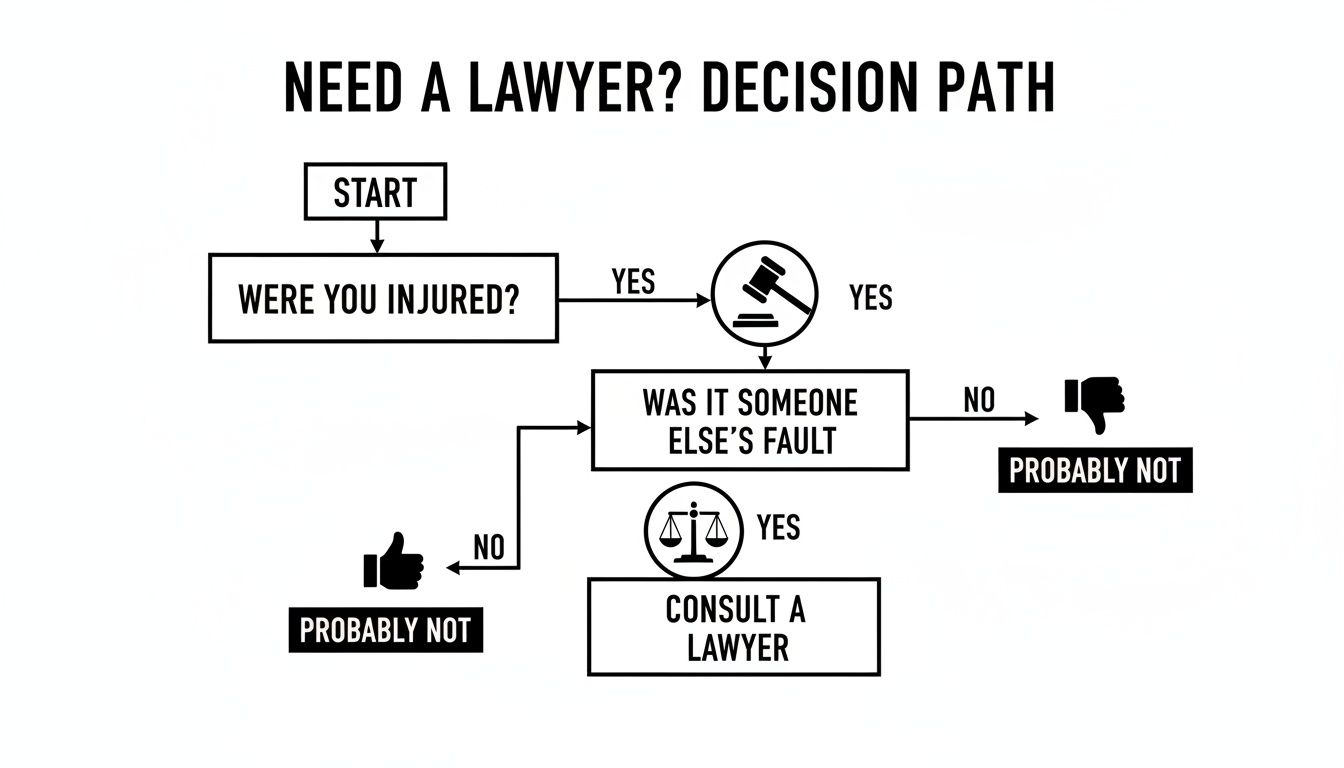
As the guide shows, if you were injured and it wasn't your fault, speaking with an attorney is almost always the right move to understand what your options are.
Signs You Should Contact an Attorney Immediately
Some situations are clear red flags, signaling that you need to get professional legal advice right away. Trying to navigate these scenarios alone can be a costly mistake.
Here are some of the most common ones we see:
| Situation | Why an Attorney is Critical |
|---|---|
| Serious or Lasting Injuries | An attorney calculates the full lifetime cost of your injury—not just current bills—to ensure your settlement covers future needs. |
| Fault is Being Disputed | When the other side blames you, a lawyer is needed to gather evidence, interview witnesses, and prove who was actually responsible. |
| Lowball Settlement Offers | Insurers often make quick, low offers to close claims cheaply. An attorney knows your case's true value and fights for it. |
| The Insurer Goes Silent | If the adjuster ignores your calls or delays your claim, it's a classic tactic. A lawyer forces them to respond and act in good faith. |
| Government Entity is Liable | Suing a city or state agency involves unique, complex rules and short deadlines. This is not a DIY situation. |
These are the moments when an experienced professional can make all the difference, protecting you from common insurance company tactics and complex legal hurdles.
Your Lawyer's Biggest Role: Negotiation
The primary role of a personal injury lawyer is often that of a skilled negotiator. Because the overwhelming majority of outcomes are negotiated, plaintiffs who retain experienced attorneys tend to obtain higher net recoveries after fees and costs.
Think about that for a moment. In the U.S., a staggering 90–96% of personal injury cases are resolved through a settlement, never seeing the inside of a courtroom. This makes your attorney's ability to negotiate the single most important factor in your case.
This is where a seasoned professional truly earns their keep. They understand the pressure points and have the experience to counter the insurance company's arguments effectively.
Finally, don’t wait. Every state sets a strict deadline, called the statute of limitations, for filing a personal injury lawsuit. For example, you can learn more about the statute of limitations for a car accident in Texas here. Miss that deadline, and you could lose your right to compensation forever.
How to Find the Right Attorney for Your Case
Searching for the right personal injury attorney in Texas can feel overwhelming. A quick Google search will throw hundreds of names at you, all with flashy websites and bold promises. But finding the best lawyer for your specific situation requires looking past the billboards and TV ads. The real goal here is to create a small, powerful list of potential attorneys who have a proven history of winning cases just like yours.
A great starting point is the State Bar of Texas website. It’s a neutral, reliable place to confirm that any lawyer you’re considering is licensed and doesn't have any disciplinary actions against them. You can also check out well-known legal directories like Avvo, Martindale-Hubbell, or Justia, which often feature reviews from past clients and even other attorneys.
Think of these as just the first step. The real work—and what separates a good choice from a great one—is in how you vet the candidates based on their actual performance.
Look for a Specialist, Not a Generalist
Personal injury law is a massive field. The lawyer who excels at slip-and-fall claims might not know the first thing about the federal regulations governing commercial trucking accidents. You wouldn't see a foot doctor for a heart problem, and the same logic applies here. You need a specialist.
As you start looking at different lawyers and firms, pay close attention to the types of cases they highlight. Their website and case results should tell you everything you need to know about their focus. Ask yourself:
- Does their practice revolve around motor vehicle accidents? Do they consistently handle car, truck, and motorcycle wreck cases?
- What kind of injuries are they used to dealing with? If you have a catastrophic injury like a TBI or spinal cord damage, you need an attorney who understands the lifelong costs and medical complexities involved.
- Do they know the local legal landscape? An attorney who regularly practices in the Dallas County or Tarrant County courts will have an invaluable home-field advantage.
Finding someone with direct, hands-on experience in your specific type of case means they'll be ready for the unique challenges and legal tactics the other side will use.
Use Real Data to See Their Track Record
This is where you can stop guessing and start knowing. Most people are already thinking this way. Research from iLawyerMarketing.com shows that while an attorney's online reputation influences up to 90% of us, a proven track record is the single most important factor for nearly 40% of people hiring a lawyer.
Instead of just taking a lawyer at their word, you can now verify their claims with hard data. This is exactly what a platform like Verdictly was built for. It gives you direct access to a database of real Texas verdicts and settlements, so you can see for yourself what different attorneys have actually achieved for their clients.
By filtering for cases that are similar to yours—same accident type, same county—you can get a realistic benchmark for what to expect. More importantly, you can find the lawyers who are consistently getting great results in your exact situation. This evidence-based approach helps you build a list of attorneys who don't just talk about winning; they actually do it.
Build Your Shortlist for Consultations
After doing your homework, you should have a solid list of three to five attorneys who check all the boxes: they specialize in your type of case and have the public results to back it up. Now you’re ready to start scheduling consultations.
Don't think of this as just a list of names. It's a curated group of specialists who have already demonstrated they can win in the exact legal arena you're about to enter.
Remember, you’re hiring a professional for a crucial job. Treat it with that level of seriousness. By digging into their specific experience and backing it up with real case data, you move past the marketing hype and focus on what truly matters: competence and a history of success. This puts you in a position of power and confidence as you choose the advocate who will fight for you.
Getting the Most Out of Your Initial Consultation

Think of your initial consultation as a job interview. But here’s the twist: you’re the one doing the hiring. This meeting is your chance to size up the attorney, get a feel for their style, and decide if they’re the right person to fight for you.
Most personal injury lawyers offer these first meetings for free, so you have nothing to lose and everything to gain by being prepared. It’s about more than just telling your side of the story; it's your opportunity to gauge their experience and see how they’d actually handle your case.
Asking Questions That Get Real Answers
Anyone can give a good sales pitch. Your job is to cut through that and get to the core of their expertise. The trick is to ask questions that require specific, thoughtful answers, not just a simple "yes" or "no."
For instance, asking "Are you experienced?" is a waste of time. Of course, they'll say yes. You need to ask questions that force them to prove it with details from their actual work. This is how you find out if they're a true specialist or just a generalist trying to land a new client.
The table below shows how to reframe your questions to get the meaningful answers you need.
Key Questions for Your Attorney Consultation
| Instead of Asking This... | Ask This More Effective Question... | Why It Matters |
|---|---|---|
| "Do you handle car accident cases?" | "How many cases involving a commercial truck on an interstate have you taken to trial in the last five years?" | This drills down into specific, relevant experience. It tells you if they've handled the unique complexities of your situation, not just a broad case category. |
| "Who will I be working with?" | "Who is the primary contact for my case, and what is your firm's policy on returning client calls and emails?" | This uncovers the day-to-day reality. You need to know if you'll be working with the senior partner you're meeting or a junior associate you've never seen before. |
| "What do you think my case is worth?" | "Based on these initial details, what are the key factors you see that will strengthen or weaken my claim for damages?" | This avoids asking for a premature guess. Instead, it reveals their analytical process and shows you how they think about the critical elements of a case like yours. |
By being more pointed, you’ll walk away with a much clearer picture of who you'd be working with every day.
Red Flags to Watch for During the Meeting
Just as crucial as asking the right questions is knowing how to spot the warning signs. This first meeting can tell you everything you need to know about an attorney's professionalism and how they really treat their clients. When you're making a decision about hiring a personal injury attorney, these red flags should make you think twice.
Keep an eye out for any of these behaviors:
- Guaranteed Outcomes: No ethical lawyer can ever guarantee a specific dollar amount or a win. The legal system is just too unpredictable. A promise is a huge red flag and a sign of unprofessionalism.
- High-Pressure Tactics: Do you feel rushed or pushed to sign a contract right there on the spot? A good lawyer will give you time to think it over. If you feel cornered, it’s best to walk away.
- Vague Fee Structures: The attorney should be able to clearly explain their contingency fee, what it includes, and how case costs (like expert witness or court filing fees) are paid. If they're evasive about money, that’s a bad sign.
- Poor Communication: Is the lawyer constantly checking their phone, interrupting you, or just not paying attention? This first meeting is when they should be on their best behavior. If they aren’t engaged now, they definitely won’t be later.
Your gut feeling is one of your most powerful tools here. If something just feels off, or if your personalities clearly clash, it’s perfectly fine to thank them for their time and keep looking. You need a partner you can trust.
Ultimately, this consultation is a two-way street. They're evaluating your case, but you are absolutely evaluating them. Come prepared, ask smart questions, and trust your instincts.
Decoding Contingency Fees and Legal Costs
Let's talk about the elephant in the room: legal fees. For most people, the thought of hiring a lawyer brings up images of huge retainers and ticking hourly bills. But in the world of personal injury, that’s not how it works at all. The system is designed so that anyone can get top-notch legal help, regardless of their bank account.
You’ll almost always work with a personal injury attorney on a contingency fee basis. It’s a straightforward and powerful arrangement: your lawyer only gets paid if they win your case. Their fee is simply a percentage of the money they recover for you, whether that’s from a settlement or a jury verdict.
This setup is great because it puts you and your lawyer on the same team. They have a direct financial stake in getting you the best possible result. If they don’t win, you don’t owe them a penny for their time. It's that simple.
Understanding the Standard Percentages
So, what's the standard cut? In Texas, the typical contingency fee for a personal injury case falls between 33% and 40%. The exact percentage usually hinges on how far your case has to go.
For instance, many lawyers charge 33.3% (or one-third) if the case settles before a lawsuit is even filed. This happens when the facts are pretty clear and the insurance company comes to the table to negotiate in good faith.
But if your case gets more complicated and your lawyer has to file a lawsuit, that fee will likely jump to 40%. That increase reflects the massive amount of extra work—depositions, expert witnesses, court filings—that goes into preparing a case for trial. Make sure you see this tiered structure spelled out clearly in any agreement you sign.
Fees vs. Costs: An Important Distinction
This is a point of confusion for many clients, but it's crucial to grasp before you hire anyone. An attorney's fee is their payment for their work. The case costs are all the other expenses needed to build and fight your case.
Think of it this way: the fee is the lawyer's paycheck, while the costs are the case's operating budget.
Case costs are the necessary expenses your law firm pays upfront to build a strong case. These are separate from the attorney's percentage-based fee and are typically reimbursed from the final settlement amount.
These expenses can really add up, particularly in a complex lawsuit. They aren't part of the lawyer's fee; they are the funds needed to give your case the best chance of success.
What Do Case Costs Usually Include?
Your law firm will almost always advance the money for these expenses, acting like an interest-free loan to fund your claim. It’s absolutely essential that you understand what these costs might be and how they get paid back out of your settlement.
Common case costs include things like:
- Court Filing Fees: The administrative charges to officially start a lawsuit.
- Expert Witness Fees: This is often the biggest expense. It’s what you pay medical experts, accident reconstruction specialists, or economists to analyze your case and testify.
- Deposition Costs: Paying for court reporters and videographers to record sworn testimony from witnesses.
- Evidence Gathering: The cost of obtaining official police reports, all your medical records, and other critical documents.
Once your case is resolved, these advanced costs are paid back from the total settlement. For a deeper dive into this, you can learn more about how personal injury lawyer fees are structured. Any good attorney will give you an itemized list of every cost and be transparent about how your money is being spent. Never hesitate to ask for it.
How to Be Your Own Best Advocate in Your Case

Once the contracts are signed and you’ve officially hired an attorney, your role in the case doesn't end—it just shifts. From this point forward, you are the most important member of your own legal team. Your lawyer handles the legal strategy and negotiations, but the strength of your case hinges on the information, evidence, and cooperation you provide.
Think of it this way: your lawyer is the pilot, but you’re the navigator supplying the critical data. The more organized and proactive you are, the smoother the journey will be and the better your chances of reaching a favorable outcome. This partnership is the backbone of a compelling, undeniable claim.
Organize Your Case File Immediately
Your attorney is going to ask for a mountain of paperwork. The faster you can get it to them, the quicker they can start building your case. My advice? Don't wait to be asked. Start gathering everything related to your accident and injuries into one dedicated folder, whether it's a physical file or a digital one on your computer.
Here’s what should be in your initial document collection:
- The Official Police Report: This is the foundational document of your claim.
- Photos and Videos: Include every picture you took at the scene—the accident, vehicle damage, and especially photos documenting your injuries as they heal over time.
- Witness Information: Get their full names, phone numbers, and any notes you took on what they saw.
- Medical Records: This means everything. Every bill, visit summary, prescription receipt, and discharge paper from every single doctor, therapist, or hospital you've seen.
Having this information ready from day one shows you're a serious, credible partner in your own case. It can make a huge difference in how quickly your attorney can get the ball rolling.
Actions That Strengthen Your Claim
Beyond the paperwork, your daily actions from here on out play a massive role in the outcome. Believe me, the defense lawyers and insurance companies are actively looking for any reason to downplay your injuries or argue you aren't as hurt as you claim. Your job is to give them absolutely nothing to work with.
The period after you hire an attorney is not a passive waiting game. Your conduct, documentation, and communication directly impact the evidence your lawyer has to fight for your compensation.
A few simple, consistent habits can protect the value of your claim and make your attorney's job much, much easier.
Follow Medical Advice and Document Your Recovery
This is the big one. It's completely non-negotiable. If your doctor prescribes physical therapy, you go to every single session. If you're told to avoid heavy lifting, you follow those instructions to the letter. Failing to follow medical advice is one of the costliest mistakes you can make.
Why? Because insurance adjusters will immediately argue that if you weren't following your doctor's orders, your injuries must not be that serious.
To fight back against this tactic, keep a simple journal. Just a few notes each day about your pain levels, the limitations you're experiencing, and any daily tasks you’re struggling with. This creates a powerful, real-time record of your experience. As you get into this habit, it’s also a good idea to understand how to prove pain and suffering in a way that stands up in court.
Finally, a crucial tip: stay off social media. It’s standard practice for defense teams to dig through claimants' social media profiles. A single photo of you smiling at a family barbecue, or an innocent post about taking a walk, can be twisted and used to argue that you're exaggerating your injuries. The safest move is to just stop posting completely until your case is resolved.
Got Questions? We’ve Got Answers
Once you've hired an attorney and your case is underway, you're still going to have questions. That’s completely normal. The legal world has its own language and rules, and it’s easy to feel a little lost.
Think of this section as a quick field guide to some of the most common things clients wonder about during a personal injury claim in Texas. Getting a handle on these key issues will help you know what to expect and make working with your attorney a lot smoother.
How Long Do I Have to File a Lawsuit in Texas?
This is probably one of the most critical questions you can ask, and the answer is dictated by something called the statute of limitations. In Texas, the rule is pretty straightforward: you generally have just two years from the date you were injured to file a lawsuit.
And when I say this deadline is strict, I mean it. If you miss it by even one day, a judge will almost certainly throw your case out. You'll lose your right to seek compensation for good.
Now, there are a few very specific, very narrow exceptions. For example, if the injured person was a minor, the two-year clock might not start ticking until they turn 18. But you should never, ever bank on an exception. The best advice I can give is to talk to a lawyer well before the deadline is even on the horizon. They need plenty of time to investigate everything and get the required paperwork filed correctly.
What if I Was Partially at Fault for the Accident?
This is a huge source of anxiety for many people, but don't panic. Being partly to blame for what happened doesn't automatically kill your case in Texas. Our state follows a rule known as modified comparative fault, though you’ll often hear lawyers call it "proportionate responsibility."
Here’s the bottom line: you can still recover money as long as you are not found to be 51% or more at fault for the accident.
If a jury decides you share some of the blame (but 50% or less), your final compensation will simply be reduced by that percentage.
Here’s a real-world example: Let's say a jury decides your damages from a car wreck are worth $100,000. But they also believe you were 20% at fault because you were going a little over the speed limit. Under Texas law, your $100,000 award gets reduced by your 20% of fault ($20,000), so you would end up recovering $80,000.
This rule is exactly why hiring an experienced personal injury attorney is so crucial. A good lawyer will dig for evidence to minimize any fault assigned to you and protect the value of your claim.
Can I Switch Attorneys if I am Unhappy?
Absolutely. It’s your case, and you have the right to change lawyers at any point if you’re not happy. You need an advocate you trust and feel confident in.
That said, swapping lawyers mid-stream isn't always simple and does have some financial strings attached. Your first attorney will almost certainly place a lien on your case. A lien is just a legal claim for payment for the time and money they've already put into your case.
This means when you eventually get a settlement, your first lawyer gets paid out of that money for their work. Your new lawyer will have to work out an agreement with the old one on how they’ll split the total attorney's fee. It can get complicated, so it's usually best to try to work things out with your current lawyer before making a change.
What Does My Attorney Mean by the "Value" of My Case?
When a lawyer talks about your case's "value," they aren't just pulling a number out of thin air. It’s a professional estimate of what you could reasonably expect to recover, and it's based on cold, hard evidence. Calculating this is a detailed process that looks at a lot of different pieces.
Here are the key things an attorney will analyze to figure out that number:
- Economic Damages: These are the straightforward, calculable financial hits you’ve taken. Think medical bills (past and future), lost income from missing work, and property damage costs.
- Non-Economic Damages: This is the tougher stuff to put a price on. It covers your physical pain, emotional distress, and the ways the injury has impacted your ability to enjoy life.
- Strength of Evidence: How solid is the proof that the other side is at fault? The clearer the liability, the higher the case value.
- Comparable Case Outcomes: This is huge. Experienced lawyers use data from past verdicts and settlements to see what juries and insurance companies in your area have paid for injuries like yours.
This full picture gives you a solid benchmark for settlement talks and keeps you from accepting a lowball offer that doesn't truly cover everything you've been through.
Are you trying to understand the potential value of your motor vehicle accident case? Verdictly provides access to a database of real Texas verdicts and settlements, allowing you to see what similar cases have achieved. Empower your negotiations with data by visiting https://verdictly.co.
Related Posts

How Auto Accident Attorney Fees Actually Work in Texas
Confused about auto accident attorney fees in Texas? This guide breaks down contingency fees, hidden costs, and how to calculate what you actually take home.