
8 Clear Signs of a Bad Lawyer in 2026 You Can’t Afford to Ignore
Are you getting the best representation? Learn the top signs of a bad lawyer, how to verify them, and what to do next to protect your case and your rights.
Hiring an attorney for your motor vehicle injury case is a critical step toward securing fair compensation. But what happens when the professional you trust becomes a roadblock to justice? Not all legal representation is created equal, and a subpar lawyer can be more damaging than no lawyer at all. They can miss deadlines, undervalue your claim, and leave you with a settlement that barely covers your medical bills. Recognizing the signs of a bad lawyer early is crucial for protecting your rights and financial future.
This guide provides a practical, data-backed checklist of critical warning signs, with actionable steps you can take to verify your concerns and regain control of your case. We will move beyond vague feelings of doubt and give you concrete red flags to watch for, such as persistent communication failures, unclear billing practices, and a lack of relevant experience in Texas motor vehicle law. For each sign, you'll learn not just what to look for, but how to investigate it using objective resources and what your next steps should be. We'll show you how to move from uncertainty to empowerment, ensuring your advocate is truly fighting for your best interests, not just an easy resolution.
1. Lack of Communication and Unresponsiveness
One of the most immediate and frustrating signs of a bad lawyer is a consistent failure to communicate. If your attorney regularly ignores your calls, leaves emails unanswered for weeks, or fails to provide meaningful updates on your case, it’s a significant red flag. This lack of contact leaves you in the dark, unable to make informed decisions about critical matters like settlement offers or legal strategy.
Effective legal representation is built on a foundation of trust and clear communication. An unresponsive lawyer can signal disorganization, an unmanageable caseload, or a simple lack of concern for your legal well-being. This is especially damaging in time-sensitive personal injury cases where missing a deadline or failing to respond to an offer can have irreversible consequences.

Why It's a Problem
Unresponsiveness directly undermines your ability to participate in your own case. It creates unnecessary anxiety and can lead to missed opportunities. For example, a delayed response to an insurance adjuster's settlement offer could cause the offer to be rescinded, forcing you into a longer, more expensive litigation process.
Key Insight: Persistent communication failures are not just poor customer service; they can border on professional negligence. Your lawyer has an ethical duty to keep you reasonably informed about the status of your case.
Actionable Steps to Take
If you're facing a wall of silence from your attorney, don't wait for the problem to resolve itself. Take proactive measures to establish clear expectations and document the issue.
- Set Clear Expectations: From the beginning, discuss and formalize communication standards in your retainer agreement. Specify a reasonable response timeframe, such as 24 to 48 business hours.
- Document Everything: Keep a detailed log of every call, email, and message you send. Note the date, time, and the subject of your inquiry. This creates a paper trail if you need to escalate the issue.
- Schedule Regular Check-ins: Propose a standing weekly or bi-weekly call to discuss case progress. This puts the responsibility on the firm to prepare updates for a scheduled meeting.
- Send a Formal Request: If informal attempts fail, send a certified letter requesting a case status update and outlining your communication expectations. This formal step often gets an attorney's attention.
2. No Clear Fee Agreement or Transparent Billing
Another critical sign of a bad lawyer is a lack of transparency regarding fees and billing. If an attorney is vague about their fee structure, avoids putting the agreement in writing, or surprises you with hidden costs, it's a major red flag. Reputable attorneys are upfront about their financial terms, ensuring you understand exactly how they get paid and what expenses you will be responsible for.
A clear, written fee agreement is the cornerstone of a healthy attorney-client relationship. Ambiguity in billing practices can lead to significant financial strain and suggests that the lawyer may be more focused on their revenue than on securing the best outcome for your case. In personal injury claims, this transparency is non-negotiable, as unexpected deductions can drastically reduce your final settlement.
Why It's a Problem
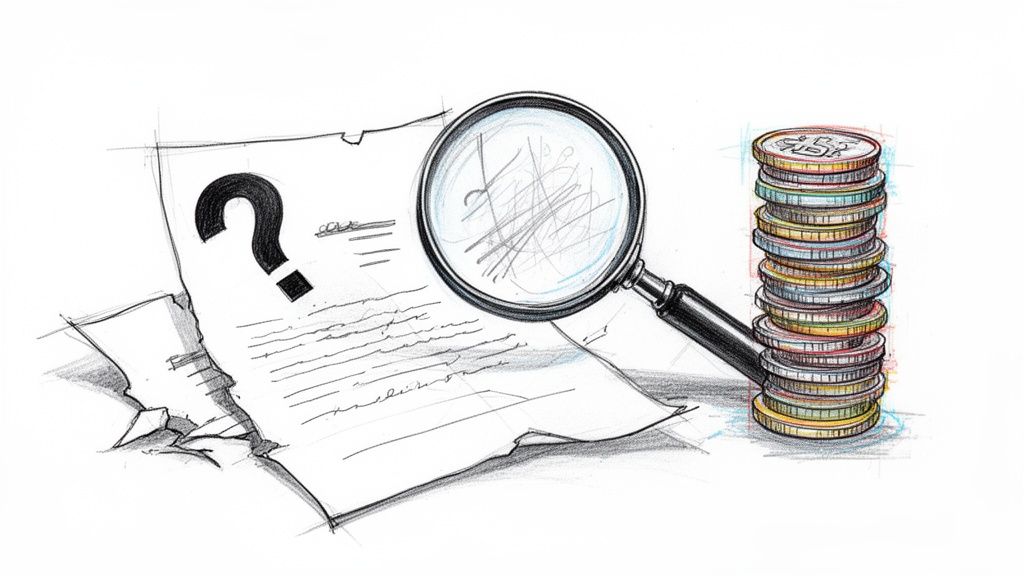
Vague financial terms can erode trust and leave you vulnerable to exploitation. For instance, an attorney might agree to a standard 33% contingency fee but later deduct thousands in "case management" costs that were never discussed. This lack of clarity can turn a $50,000 settlement offer into a much smaller net payout for you after undisclosed legal fees and expenses are subtracted.
Key Insight: A lawyer’s ethical obligation includes making their fee structure clear and reasonable. A refusal to provide a detailed, written agreement is a breach of this fundamental duty.
Actionable Steps to Take
Protect yourself from financial surprises by demanding clarity and documentation before you hire an attorney. This ensures you and your lawyer are on the same page from the start.
- Demand a Written Agreement: Never proceed without a signed, detailed fee agreement. It should clearly state the contingency fee percentage and specify which costs you are responsible for, such as court filing fees or expert witness expenses.
- Ask for an Expense Breakdown: Request a list of typical costs associated with cases like yours. Ask who pays for depositions, medical records procurement, and investigator fees.
- Request Regular Billing Statements: Even in a contingency case, ask for periodic statements itemizing the costs incurred on your behalf. This keeps you informed and prevents surprises at settlement.
- Compare Fee Structures: Before hiring, consult with multiple attorneys to understand the standard auto accident attorney fees in your area. This context helps you identify unreasonable terms.
3. Inexperience or Specialization Outside Motor Vehicle Injury Law
Hiring an attorney who lacks specific, dedicated experience in motor vehicle injury law is one of the most detrimental yet subtle signs of a bad lawyer. A general practitioner or a lawyer specializing in an unrelated field like real estate or criminal law may not grasp the complex nuances of Texas negligence statutes, insurance negotiation tactics, or realistic case valuations. This inexperience often leads them to undervalue claims and miss critical opportunities to maximize your financial recovery.

Why It's a Problem
An inexperienced attorney can severely damage your case. For instance, a lawyer unfamiliar with Texas’s comparative negligence rules might miscalculate your potential damages if you are found partially at-fault. Similarly, a real estate attorney might accept an initial settlement offer of $15,000, not realizing that data for similar injuries in your county shows an average case value closer to $45,000. Their lack of specialized knowledge directly translates to less money for your recovery.
Key Insight: Specialization matters. A seasoned motor vehicle injury lawyer understands how to build a case, leverage evidence, and counter insurance company tactics in ways a generalist simply cannot.
Actionable Steps to Take
Before committing, thoroughly vet an attorney’s specific experience in motor vehicle accident cases. The initial consultation is your opportunity to ensure their expertise aligns with your needs. To learn more about what to look for, check out our guide on hiring a personal injury attorney.
- Ask Direct Questions: Inquire about the percentage of their caseload dedicated specifically to motor vehicle injury claims. Ask for examples of similar cases they have handled.
- Verify Case Value Knowledge: Ask how they determine case value. A strong attorney will reference comparative settlement data, jury verdict research, and specific legal precedents.
- Research Typical Outcomes: Use a tool like Verdictly to research verdicts and settlements for cases similar to yours in the same county. Compare this data to the attorney’s initial assessment.
- Check Credentials: Look for specialization certifications on profiles from the State Bar of Texas or other legal directories. This can indicate a focused practice.
4. Pressure to Accept Low Settlement Offers Without Justification
One of the most damaging signs of a bad lawyer is when they aggressively push you to accept a settlement offer without a clear, data-backed justification. This behavior often signals that the attorney is prioritizing a quick case closure over your best interests. This can happen if they have an unmanageable caseload, want a fast fee, or are simply unwilling to put in the work required for proper negotiation and potential litigation.
A competent attorney will present an offer with a thorough analysis, explaining how it aligns with your damages, potential trial outcomes, and comparable case values. They should provide a reasoned recommendation and give you ample time to make an informed decision, not pressure you into a hasty agreement that may undervalue your claim.
Why It's a Problem
Accepting a lowball offer under pressure can be a catastrophic financial mistake. It may leave you with insufficient funds to cover future medical expenses, lost wages, and long-term pain and suffering. For instance, an attorney might pressure you to take a $25,000 offer for a back injury without first obtaining a medical expert's evaluation of your long-term care needs, leaving you to cover future costs out-of-pocket.
Key Insight: An attorney’s primary duty is to maximize your recovery, not to churn through cases. Pressure to settle without a sound, evidence-based rationale is a serious breach of that duty and a clear warning sign.
Actionable Steps to Take
If your lawyer is rushing you to accept an offer, it’s crucial to pause and take control of the situation. Use data and clear communication to protect your rights and ensure you are being treated fairly.
- Research Comparable Cases: Use tools to research typical settlement ranges for your specific injury, accident type, and county. If data shows similar cases average $60,000, you have a strong basis to question a low offer.
- Request a Written Justification: Ask your attorney for a detailed written explanation of why they believe the offer is fair. This should include an analysis of your damages and how the offer compares to similar local verdicts and settlements.
- Insist on Time to Consider: Never accept a settlement on the spot. Inform your attorney you need at least 48 to 72 hours to review the offer and consult with your family.
- Document the Pressure: Keep a written record of every conversation where you feel pressured. Note the date, time, and specific language your attorney used. This documentation is vital if a dispute arises.
5. Failure to Investigate Thoroughly or Gather Evidence
A winning legal strategy is built on a foundation of strong evidence, yet one of the most damaging signs of a bad lawyer is a failure to conduct a comprehensive investigation. A weak attorney might rely solely on the initial police report or push for a quick settlement without digging deeper. This passive approach often leaves crucial, value-adding evidence undiscovered.
Thorough investigation is not optional; it is the engine of a successful personal injury claim. This includes gathering all medical records, interviewing witnesses, documenting the accident scene, and retaining experts when necessary. An attorney who skips these steps is failing to build the strongest possible case, which can drastically reduce your negotiating power and the final value of your settlement or verdict.
Why It's a Problem
Inadequate investigation directly weakens your claim and leaves you vulnerable to the defense's arguments. For instance, if your lawyer fails to hire a medical expert to connect your injury directly to the accident, the insurance company can argue your condition was pre-existing. Similarly, accepting a police report at face value without investigating the defendant's driving history could mean missing a pattern of recklessness that would strengthen your case for negligence.
Key Insight: A lawyer's job is to tell your story with evidence. A failure to gather that evidence is a failure to properly represent you, potentially costing you tens of thousands of dollars in compensation.
Actionable Steps to Take
Be proactive in overseeing your case's investigation. Ensure your lawyer is taking the necessary steps to build a robust evidence file from the very beginning.
- Request an Investigation Plan: Early in the case, ask your attorney for a written plan detailing the evidence they intend to gather, including witness interviews, expert consultations, and document requests.
- Verify Evidence Collection: Ask for copies of key documents as they are obtained, such as the full police report, all medical records, and photos of the accident scene.
- Discuss Expert Witnesses: Inquire if experts like accident reconstructionists or medical specialists are needed for your case and what the plan is for retaining them.
- Check Defendant's History: Ask your lawyer if they have performed a background check on the defendant for prior accidents or a history of traffic violations.
6. Conflicts of Interest or Cozy Relationships with Insurance Companies
An attorney’s loyalty should be undivided, but sometimes a lawyer develops relationships with insurance companies or defense counsel that create a conflict of interest. This is one of the most subtle but damaging signs of a bad lawyer. An attorney who is too “cozy” with the opposition may prioritize maintaining those relationships over fighting for your maximum compensation, leading them to accept lowball settlement offers without a fight.
These conflicts aren't always obvious. They manifest as a reluctance to challenge an adjuster's valuation, a pattern of quick, low-value settlements, or an attitude that seems more aligned with the insurance company's interests than your own. An attorney might downplay the severity of your injuries or discourage litigation to avoid straining a profitable, long-term referral pipeline with a particular carrier.
Why It's a Problem
A conflict of interest directly compromises your attorney's duty to advocate for you zealously. Instead of pushing for the highest possible recovery, the lawyer may settle your case for a fraction of its true worth to stay in the good graces of an insurance company. For instance, they might accept a $35,000 offer when data from a tool like Verdictly shows similar cases in your jurisdiction average $65,000, simply because it’s an easy resolution with a familiar adjuster.
Key Insight: An attorney’s professional obligation is to you and you alone. Any relationship that encourages them to prioritize a quick settlement over a fair outcome is a serious ethical breach and a clear sign of poor representation.
Actionable Steps to Take
If you suspect your attorney is too friendly with the opposing side, you must take steps to protect your interests and demand transparency.
- Ask Direct Questions: Inquire about your attorney’s history with the specific insurance company and adjuster on your case. Ask how many cases they have handled against this carrier.
- Benchmark Your Settlement Offer: Use objective data to evaluate any offer. Compare the proposed amount against Verdictly’s benchmarks for similar injury cases to see if it aligns with established precedents.
- Demand a Litigation-Focused Strategy: Insist that your attorney prepare the case as if it will go to trial. This forces them to build a stronger argument rather than aiming for a quick, subpar settlement.
- Consult the State Bar: If you have strong evidence of an unethical conflict of interest, consider reporting the attorney to the State Bar of Texas for guidance.
7. No Trial Experience or Credible Trial Threat
A critical, yet often overlooked, indicator of a potentially bad lawyer is their lack of genuine trial experience. Insurance companies and opposing counsel negotiate settlements based on the credible threat of litigation. If your attorney has a reputation for avoiding the courtroom at all costs, the other side has no incentive to offer a fair settlement because they know your lawyer will eventually fold.
This dynamic drastically reduces your negotiating leverage. An attorney who is unwilling or unable to take a case to trial is negotiating from a position of weakness. Insurance adjusters are sophisticated and keep track of which attorneys try cases and which ones are "settlement mills." This directly impacts the value of your case, often leading to lowball offers that don't reflect the true extent of your damages.
Why It's a Problem
An attorney without a credible trial threat essentially caps your potential recovery before negotiations even begin. For example, an insurance company might know an attorney has a 2% trial rate and consistently settles for less. They may offer $40,000 on a case where data shows similar jury verdicts exceed $75,000, confident the lawyer will accept it to avoid trial. This leaves significant money on the table that you are rightfully owed.
Key Insight: A lawyer’s willingness and ability to go to trial is their most powerful tool. Without it, they are simply asking for what the insurance company is willing to give, not what your case is truly worth.
Actionable Steps to Take
You must proactively vet an attorney's trial readiness and experience. Don't be afraid to ask direct questions to understand if they can effectively represent you if a settlement cannot be reached.
- Ask About Trial History: Inquire directly about their trial experience. Ask how many cases they've taken to a jury verdict, what their success rate is, and for examples of recent trial outcomes.
- Discuss Trial Strategy: Ask how they would present your specific case to a jury. A confident trial lawyer can articulate a clear strategy for jury selection, presenting evidence, and examining witnesses.
- Clarify Who Tries the Case: Some firms have a primary attorney handle negotiations but refer cases to outside "trial counsel" if litigation is necessary. Ask if your attorney will personally be trying your case.
- Leverage Case Data: Use resources like Verdictly to see what similar cases are worth at trial in your jurisdiction. Ask the attorney how their strategy would aim to achieve a comparable verdict. To understand the full scope of this process, explore the litigation process in detail and see what's involved.
8. Guarantees of Specific Outcomes or Unrealistic Promises
One of the most unethical signs of a bad lawyer is guaranteeing a specific outcome or promising an unrealistic settlement amount. If a lawyer assures you they will win your case or promises a specific dollar figure, you should be extremely cautious. The legal system is inherently unpredictable, with variables like jury decisions, judicial rulings, and opposing counsel's tactics making absolute certainty impossible.
Ethical and experienced attorneys provide educated estimates based on case law and historical data, but they will never make a guarantee. An attorney who promises a $500,000 settlement is not being confident; they are being misleading, potentially violating professional conduct rules. This tactic is often used to pressure clients into signing a retainer agreement under false pretenses.
Why It's a Problem
Unrealistic promises set you up for major disappointment and can lead you to reject reasonable settlement offers in pursuit of a guaranteed, but unattainable, figure. This can prolong your case, increase your legal costs, and ultimately result in a worse outcome than you might have otherwise achieved. A lawyer's value is in their realistic assessment and strategic guidance, not in selling you a fantasy.
Key Insight: A lawyer's promise of a specific result is a serious ethical violation. Attorneys have a professional duty to provide a sober, realistic assessment of your case, including its potential weaknesses and risks.
Actionable Steps to Take
Protect yourself from false promises by demanding transparency and verifying claims with objective data. An honest lawyer will welcome your diligence and be prepared to discuss both the strengths and weaknesses of your case.
- Ask for a Realistic Range: Instead of a single number, ask the attorney to explain the potential range of outcomes and the factors that could influence where your case might land.
- Request a Written Analysis: Ask the lawyer to provide a written explanation of how they determined your case's potential value, citing relevant statutes and similar case results.
- Discuss Potential Risks: A good attorney will voluntarily discuss what could go wrong. Ask directly: "What are the biggest challenges or risks in my case?"
- Verify with Independent Data: Use objective resources like Verdictly to research what similar cases in your specific county have actually settled or been awarded. This gives you an unbiased benchmark to compare against a lawyer's claims.
8-Point Comparison: Signs of a Bad Lawyer
| Issue | 🔄 Implementation Complexity | ⚡ Resource Requirements | ⭐ Expected Outcomes / 📊 Impact | 📊 Ideal Use Cases | ⭐ Key Advantages / 💡 Tips |
|---|---|---|---|---|---|
| Lack of Communication and Unresponsiveness | Low — procedural/cultural fix | Low–Moderate: dedicated contact, tracking tools | Missed deadlines, weakened client trust, poorer outcomes | Client intake audits; mid-case performance reviews | ⭐ Enables early corrective action • 💡 Set response SLA (24–48h) and document contacts |
| No Clear Fee Agreement or Transparent Billing | Moderate — requires written contracts & processes | Moderate: accounting, itemized billing, disclosures | Surprise costs, fee disputes, reduced net recovery | Pre-retainer review; fee negotiations | ⭐ Transparency clarifies net recovery • 💡 Request detailed written fee agreement and monthly itemized bills |
| Inexperience or Specialization Outside Motor Vehicle Injury Law | Low — choose specialist when hiring | Low for client; high for attorney to build expertise | Undervalued settlements, weak negotiation/trial prep | Avoid for complex auto-injury claims; OK for minor/simple matters | ⭐ May reduce fees for trivial matters • 💡 Verify motor-vehicle case volume, references, and county results |
| Pressure to Accept Low Settlement Offers Without Justification | Low — behavioral/strategy issue to correct | Moderate: expert evaluations, investigation, time | Underrecovery, lost leverage, foregone future damages | When insurer presses quick close or attorney is overbooked | ⭐ Recognizing pressure preserves recovery • 💡 Demand 48–72h, request written comparables and second opinion |
| Failure to Investigate Thoroughly or Gather Evidence | High — multi-step investigation required | High: investigators, experts, medical records, time | Weakened claims, missed evidence → lower awards | Severe injuries, disputed liability, complex causation cases | ⭐ Thorough investigation strengthens value • 💡 Ask for written investigation plan and expert reports before settlement |
| Conflicts of Interest or Cozy Relationships with Insurance Companies | Moderate — requires conflict checks & transparency | Low–Moderate: case history review, disclosures | Systematically lower settlements, compromised advocacy, ethical risk | Avoid counsel with frequent insurer ties; use independent counsel | ⭐ Identifying conflicts protects client interests • 💡 Ask how many cases against this insurer and review settlement history |
| No Trial Experience or Credible Trial Threat | Moderate — needs trial team and preparation | High: trial counsel, preparation, expert witnesses | Reduced settlement leverage; poor litigation outcomes if tried | Cases likely to require litigation or where insurer contests liability | ⭐ Trial experience increases negotiating leverage • 💡 Request number of trials, verdicts, and trial strategy |
| Guarantees of Specific Outcomes or Unrealistic Promises | Low — marketing/ethical red flag | Low | Unrealistic expectations, ethical concerns, client disappointment | Red flag — avoid attorneys who promise specific results | ⭐ Avoids unethical or inexperienced counsel • 💡 Seek realistic outcome ranges and verify with independent data (e.g., Verdictly) |
Take Control of Your Case with Data-Driven Decisions
Navigating the aftermath of a motor vehicle accident is overwhelming enough without the added stress of questioning your legal representation. The eight warning signs detailed in this article, from poor communication and opaque billing to a lack of relevant trial experience, are not just minor inconveniences. They are critical indicators that can jeopardize the outcome of your case and your financial recovery. Recognizing these signs of a bad lawyer is your first crucial line of defense.
If you found yourself nodding along while reading through these points, feeling a sense of familiarity with the frustrations described, it’s a clear signal that you need to take proactive steps. Ignoring these red flags won’t make them disappear; it will only deepen the potential harm to your claim. You are not powerless in this situation. Your legal journey is yours to direct, and you have the right to demand competent, ethical, and zealous advocacy.
Your Action Plan for Moving Forward
Trusting your intuition is important, but supplementing it with objective action is essential. If your lawyer’s performance is a source of concern, it's time to transition from worry to action.
- Document Everything: Keep a detailed log of every interaction, or lack thereof. Note the dates you called, the questions you asked, the vague responses you received, and any unfulfilled promises. This record is invaluable if you need to discuss your concerns formally or decide to switch attorneys.
- Request a Formal Meeting: Schedule a specific time to discuss your documented concerns. Present your points calmly and directly. A competent lawyer will address your issues professionally, while the reaction of a bad lawyer may confirm your suspicions.
- Seek a Second Opinion: You are never obligated to stick with the first lawyer you hire. Consulting with another reputable personal injury attorney in the Dallas-Fort Worth area can provide a fresh perspective and validate your concerns about your current representation.
- Empower Yourself with Data: One of the most significant power imbalances between a client and a lawyer can be information asymmetry, especially regarding case value. Your attorney might tell you a settlement offer is fair, but how can you be sure? This is where objective data becomes your greatest asset.
Ultimately, holding your legal counsel accountable is not about being difficult; it's about being a diligent advocate for your own future. The outcome of your personal injury case will have a lasting impact on your life, and ensuring you have the right person fighting for you is the most important decision you can make. Don't settle for substandard representation when your physical and financial well-being is at stake.
Are you questioning a low settlement offer or feeling unsure about your lawyer's strategy? Don't rely on guesswork. Use Verdictly to compare your case specifics against thousands of real Texas motor vehicle accident verdicts and settlements, giving you the objective data you need to make confident, informed decisions. Explore Verdictly's powerful case insights today.
Related Posts
8 Critical Signs of a Bad Attorney in 2025 You Can’t Afford to Ignore
Are you getting the best legal help? Learn the top signs of a bad attorney and how to verify their competence with these actionable steps and warning signs.