
6 Winning Personal Injury Demand Letter Example Templates for 2026
Explore our 2026 personal injury demand letter example collection. Get annotated templates for motor vehicle claims, backed by Texas case data.
After a car accident, the path to fair compensation begins with a single, powerful document: the personal injury demand letter. This isn't just a letter; it's a strategic opening statement in your negotiation with an insurance company. A well-crafted demand letter sets the tone, outlines the facts, details your damages, and presents a clear, justified settlement figure. It's the first and best opportunity to demonstrate the seriousness of your claim and convince the adjuster that a swift, equitable settlement is their most logical course of action.
This article provides more than just a template; it offers a strategic blueprint. We will dissect several personal injury demand letter example scenarios, ranging from minor fender-benders to catastrophic, life-altering events. Each example is annotated with tactical insights, explaining the "why" behind every section, from framing liability to calculating pain and suffering. You will learn not just what to write, but how to write it for maximum impact.
Our analysis is grounded in real-world data, referencing Texas motor vehicle accident outcomes from Verdictly to help you understand potential settlement ranges. We will explore how to effectively present different types of damages, including:
- Medical Documentation: Compiling and presenting treatment records.
- Lost Wages: Calculating and proving your economic losses.
- Non-Economic Damages: Articulating your pain and suffering persuasively.
- Policy Limit Demands: Strategically leveraging insurance policy limits.
By the end of this guide, you will have a comprehensive understanding of how to structure a demand letter that commands attention, substantiates your claim, and positions you for the best possible outcome.
1. Motor Vehicle Accident Demand Letter with Medical Documentation
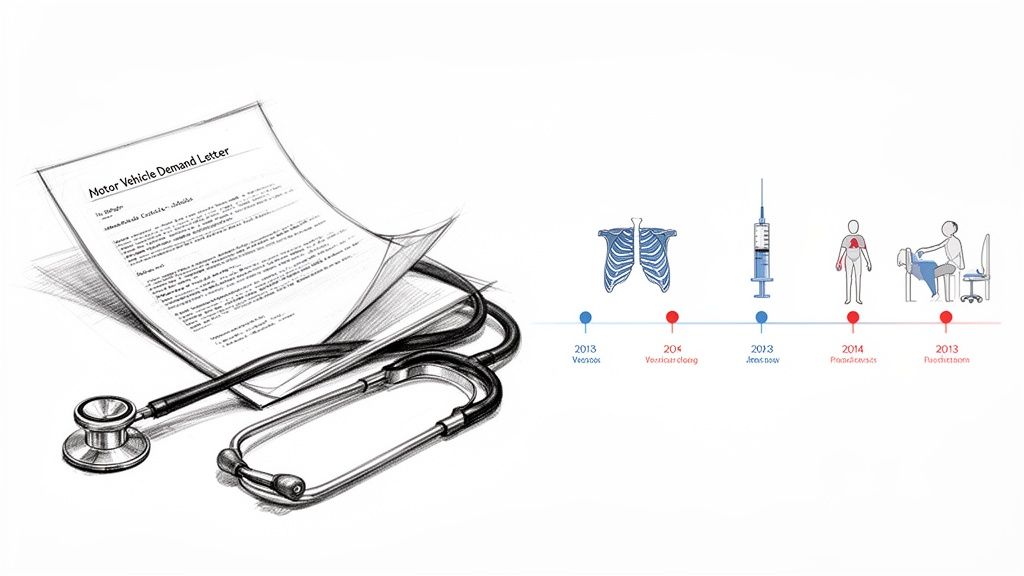
A motor vehicle accident demand letter with robust medical documentation is the cornerstone of a successful personal injury claim. This type of letter doesn’t just state your injuries; it proves them. It systematically connects the at-fault party's negligence directly to your medical diagnosis, treatment, and prognosis using a clear, evidence-based narrative. For Texas claims, this is critical for establishing causation and justifying your settlement demand.
This approach involves weaving a detailed timeline of your medical journey into the letter itself. You will present the facts of the accident and then immediately pivot to the resulting medical care, supported by attached records. This creates a compelling and logical argument that is difficult for an insurance adjuster to dispute. This is a foundational personal injury demand letter example because it demonstrates how to build a case from the ground up with irrefutable evidence.
Strategic Breakdown and Application
The power of this letter lies in its organization and substantiation. It's not just about attaching a stack of bills. It's about presenting a curated file that tells a story of injury and recovery, making the adjuster's job easier while maximizing your claim's value.
- When to Use This Approach: This method is essential for any motor vehicle accident claim involving physical injuries, from minor whiplash to severe fractures. It is particularly effective when you have undergone a clear sequence of treatment, such as emergency room visits, specialist consultations, physical therapy, or surgery.
- Why It Works: Insurance adjusters review hundreds of claims. A letter that is well-organized, factually supported by medical records, and logically structured is more likely to be taken seriously. By presenting a clear link between the accident and every medical expense, you preemptively counter common adjuster tactics like arguing that the injuries were pre-existing or the treatment was unnecessary.
Actionable Tips for Implementation
To build a powerful, medically-documented demand letter, focus on precision and evidence. Every claim you make should be backed by a corresponding document.
- Create a Medical Chronology: Start your letter with a brief summary of the accident, then immediately present a chronological list of your medical treatments. For each entry, include the date of service, the healthcare provider, the treatment received, and the cost. This timeline becomes the skeleton of your demand letter.
- Integrate Provider Statements: If possible, include a letter or note from your primary treating physician. This statement should confirm your diagnosis, state that the injuries were caused by the accident, and outline the necessity of your treatment plan and prognosis for future recovery.
- Benchmark with Data: Before calculating your final demand, use a platform like Verdictly to research settlement and verdict data for similar injuries in your specific Texas county (e.g., Dallas, Harris, Travis). Cross-reference your medical expenses ("specials") with median awards to help calculate a reasonable demand for pain and suffering ("general damages"). This data-driven approach lends significant credibility to your settlement request.
- Organize Your Attachments: Create a numbered appendix of your supporting documents. Reference each document by its number within the body of your letter (e.g., "See Appendix 3: Dr. Smith's Narrative Report"). This includes police reports, medical bills, medical records, and prescription receipts.
2. Lost Wages and Economic Damages Demand Letter
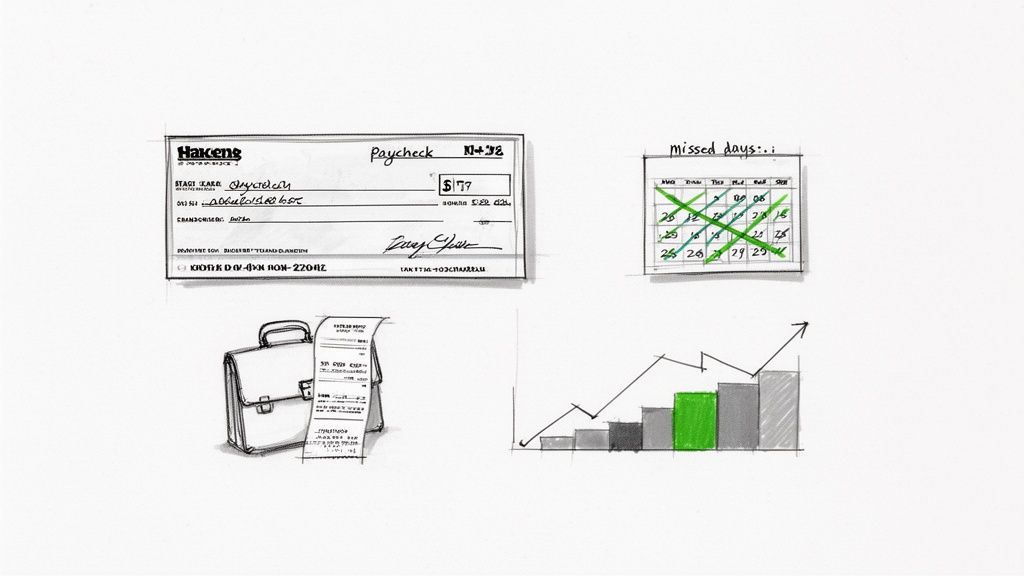
A demand letter focused on lost wages and economic damages shifts the narrative from physical injury to quantifiable financial impact. This letter meticulously documents every dollar lost due to the at-fault party’s negligence, presenting a clear and undeniable picture of economic hardship. For Texas claims, where financial losses can be substantial, this approach provides a concrete foundation for a settlement demand that is difficult for insurers to dismiss.
This strategy involves creating a detailed ledger of all economic losses, from missed paychecks to future earning potential. You will present the facts of the accident, briefly outline your injuries, and then dedicate the bulk of the letter to a comprehensive breakdown of the financial aftermath, supported by verifiable documentation. This is a crucial personal injury demand letter example as it demonstrates how to build a powerful case centered on clear, calculated economic damages that an adjuster can easily process and justify.
Strategic Breakdown and Application
The strength of this letter is its objectivity and reliance on hard numbers. It moves beyond the subjective nature of pain and suffering and grounds your claim in tangible, provable financial setbacks, making it a compelling tool for negotiation.
- When to Use This Approach: This method is vital for any claim where time off work, reduced earning ability, or significant out-of-pocket costs are a primary component of your damages. It is especially effective for individuals like a construction worker unable to perform manual labor, a small business owner whose revenue declined during recovery, or a professional facing a permanent reduction in earning capacity.
- Why It Works: Insurance adjusters operate on data and verification. A letter that presents economic damages in a clear, organized, and thoroughly documented format aligns with their evaluation process. By providing undeniable proof of financial loss, you force the adjuster to acknowledge these figures, often leading to a higher initial offer and a more efficient settlement process.
Actionable Tips for Implementation
To construct a persuasive, economically focused demand letter, your goal is to leave no financial loss undocumented. Every figure presented must be supported by evidence.
- Create a Detailed Economic Loss Statement: Begin this section of your letter with a table or itemized list that clearly separates different types of economic damages. Include categories like Lost Wages, Lost Overtime, Diminished Earning Capacity, and Out-of-Pocket Expenses (e.g., travel to appointments, medical supplies).
- Secure an Employer Verification Letter: Obtain a formal letter from your employer on company letterhead. This letter should state your job title, rate of pay, and the exact dates you were absent from work due to your injuries. It should also quantify your total lost income for that period.
- Benchmark with Data: Before finalizing your demand, use a tool like Verdictly to analyze how economic damages contribute to total awards in similar injury cases within your Texas county (e.g., Tarrant, Bexar, Denton). This data helps you understand how a jury might value your economic losses, giving you a strong, evidence-based position for your settlement negotiations. For example, if your injury is a herniated disc, you can see the median award for lost earning capacity in your specific venue.
- Document Everything for Self-Employment: If you are self-employed, compile at least two years of tax returns, profit and loss statements, and invoices to establish an average income. Contrast this with your income during the recovery period to demonstrate a clear loss of revenue directly caused by the accident.
3. Pain, Suffering, and Non-Economic Damages Demand Letter
A demand letter focused on pain, suffering, and other non-economic damages is designed to articulate the profound, personal impact of an injury beyond just medical bills. This type of letter builds a compelling narrative around your subjective losses, such as emotional distress, loss of enjoyment of life, and psychological trauma. For Texas motor vehicle claims, effectively quantifying these intangible harms is crucial for maximizing your settlement value.
This approach translates your personal suffering into a clear and justifiable financial demand. It moves beyond a simple list of expenses and instead paints a vivid picture of how the accident has fundamentally altered your daily life, relationships, and well-being. This is a vital personal injury demand letter example because it shows how to give weight to the non-economic damages that often constitute the largest portion of a settlement.
Strategic Breakdown and Application
The strength of this letter is its ability to humanize your claim, making it more than just numbers on a page for the insurance adjuster. It connects your medical evidence to real-world consequences, demonstrating a clear cause-and-effect relationship between the at-fault driver's negligence and your diminished quality of life.
- When to Use This Approach: This narrative-driven letter is essential for any case where the personal impact of the injuries is significant. It is particularly powerful for claims involving chronic pain, permanent impairment, or psychological trauma like anxiety or PTSD. Examples include a parent with a spinal injury who can no longer lift their children or an athlete who can't return to their sport.
- Why It Works: Insurance adjusters are trained to focus on objective, verifiable costs ("special damages"). This letter forces them to confront the human cost ("general damages") of the accident. By presenting a well-reasoned argument for your pain and suffering, supported by evidence and data, you anchor your settlement demand in a reality they cannot easily dismiss.
Actionable Tips for Implementation
To construct a persuasive narrative, you must connect every claim about suffering to a specific, tangible example or piece of evidence.
- Frame the Narrative Around Specific Losses: Instead of using vague terms like "pain and suffering," detail exactly what you have lost. Describe specific activities you can no longer enjoy, daily challenges you now face, and how your relationships have been affected. For example, "The constant back pain prevents me from coaching my son's Little League team, an activity we cherished."
- Incorporate Third-Party Statements: Include brief, signed statements from family, friends, or colleagues. These "witness statements" should describe the changes they have observed in your personality, activity levels, or mood since the accident, providing powerful, third-party validation of your suffering.
- Benchmark Your Non-Economic Demand: Before choosing a multiplier (typically 2-5x medical expenses), use a platform like Verdictly to analyze non-economic damage awards for similar injuries in your Texas county. Stating that "median awards for a herniated disc in Dallas County are X, supporting our demand of Y" lends immense credibility to your figure. Learn more about how you can prove pain and suffering with objective data.
- Document All Psychological Treatment: Attach all records and bills from therapists, counselors, or psychiatrists. These documents serve as concrete proof that the accident caused significant emotional distress requiring professional medical intervention. This is a key step in turning a subjective claim into a quantifiable damage.
4. Comparative Verdict Analysis Demand Letter
An advanced demand letter that integrates real verdict and settlement data from Texas motor vehicle cases is a powerful tool for establishing credible, data-backed damage requests. This method moves beyond subjective claims of value by providing objective benchmarks from actual court outcomes. It frames your demand not as an arbitrary number, but as a figure grounded in what juries and insurers in your specific jurisdiction have previously deemed fair.
This approach involves citing similar, resolved cases to justify the amount you are demanding for damages like pain and suffering. By referencing publicly available court outcomes, you are speaking the language of insurance adjusters and defense attorneys, who rely on such data to assess their own risk. This data-driven strategy represents a sophisticated personal injury demand letter example, transforming your letter from a simple request into a compelling analytical argument.
Strategic Breakdown and Application
The strength of this letter is its objectivity. By benchmarking your claim against historical data, you remove much of the speculation from the negotiation process. This forces the insurance adjuster to engage with concrete facts rather than relying on generalized, lowball settlement formulas.
- When to Use This Approach: This method is highly effective for cases with significant non-economic damages (pain and suffering) that are difficult to quantify. It is also ideal for claims in counties like Dallas, Harris, or Travis, where a large volume of case data is available, providing robust statistical support for your demand.
- Why It Works: Insurance adjusters are motivated to close files at or below their "reserve" amount, which is often set based on historical payout data. Presenting your own well-researched comparative data disrupts their internal valuation model. It shows you have done your homework and are prepared to justify your demand with the same kind of evidence they use, significantly strengthening your negotiating position.
Actionable Tips for Implementation
To build a compelling, data-driven demand letter, your focus must be on relevance and credibility. The comparables you choose must be genuinely similar to your own case to be persuasive.
- Identify Truly Comparable Cases: Use a platform like Verdictly to filter Texas court outcomes by injury type, accident type, county, and timeframe. For a Dallas County soft tissue injury claim, for example, focus on similar cases resolved in that county within the last 2-3 years to ensure the data reflects current values.
- Cite Specifics for Credibility: Don't just mention that "similar cases settle for $X." Cite the specific case numbers, court records, and dates of the verdicts or settlements. This demonstrates that your research is thorough and your data is reliable, not just cherry-picked.
- Create a Comparison Table: Organize your findings into a simple table within the demand letter. List 5-10 comparable cases, showing the key similarities (e.g., "rear-end collision, herniated disc") and the final award or settlement amount. This provides a clear, at-a-glance justification for your demand range.
- Address Potential Differences: Acknowledge any material differences between your case and the comparables and explain why your claim still fits within the established range. For instance, if your case involves a factor like shared fault, it's crucial to understand its impact. You can learn more about how fault is assessed and how it may adjust your claim's value by researching comparative negligence in Texas.
5. Pre-Litigation Settlement Demand Letter with Reservation of Rights
A pre-litigation settlement demand with a reservation of rights clause is a powerful strategic tool in Texas motor vehicle claims. This letter formally presents your settlement demand to the insurance company before a lawsuit is filed, but it includes specific legal language that preserves your right to seek further damages if the case proceeds to litigation. It creates a formal record of your attempt to resolve the matter amicably while protecting your legal position.
This approach balances a good-faith negotiation effort with the clear intention to pursue all available legal remedies if a fair settlement is not reached. You are essentially telling the insurer, "Here is a reasonable offer to settle now, but this offer does not limit the damages we will seek in court." This type of personal injury demand letter example is crucial for establishing a strong pre-lawsuit position without surrendering any legal leverage.
Strategic Breakdown and Application
The strength of this letter is its dual function: it opens the door for a quick settlement while simultaneously locking in your legal protections for a potential lawsuit. It communicates professionalism and a thorough understanding of the legal process, signaling to the adjuster that you are a serious claimant.
- When to Use This Approach: This format is ideal when you want to make a serious attempt to settle a claim before incurring the costs of filing a lawsuit, but you also recognize the possibility that litigation may become necessary. It is particularly effective in cases with moderate to severe injuries where future medical needs or lost earning capacity could significantly increase the claim's value over time.
- Why It Works: The explicit "reservation of rights" clause prevents the insurance adjuster from arguing that your initial demand represents the absolute maximum value of your claim. It puts them on notice that rejecting your reasonable pre-litigation offer could expose them to a much higher jury verdict later, creating a strong incentive for them to negotiate seriously from the outset.
Actionable Tips for Implementation
To execute this strategy effectively, your letter must be firm, clear, and legally precise. The goal is to encourage settlement while fully preserving your litigation options.
- Use Explicit Legal Language: Incorporate phrases like, "This settlement offer is made 'without prejudice' and we expressly reserve all rights to pursue any and all legal remedies and damages available under Texas law should this matter proceed to litigation." It is highly recommended to have an attorney review this specific language for compliance.
- Set a Clear and Reasonable Deadline: State a firm deadline for the insurer to respond, typically 30 days. This creates a sense of urgency and prevents the adjuster from unnecessarily delaying your claim. For example, "We request a formal response to this demand within thirty (30) calendar days from the date of this letter."
- Justify Your Demand with Comparative Data: Strengthen your demand by citing relevant settlement data. Use a tool like Verdictly to find median awards for similar injuries in your specific Fort Worth or Dallas-area county. Referencing this data provides an objective, evidence-based justification for your settlement figure and shows the adjuster you've done your homework.
- Maintain a Professional Tone: The letter should be assertive but not aggressive. Present the facts, your damages, and your legal position clearly and professionally. Avoid emotional language, as it can detract from the credibility of your fact-based argument. You can discover more about structuring these documents by reading about the essential components of a settlement demand letter.
6. Insurance Policy Limits Demand Letter
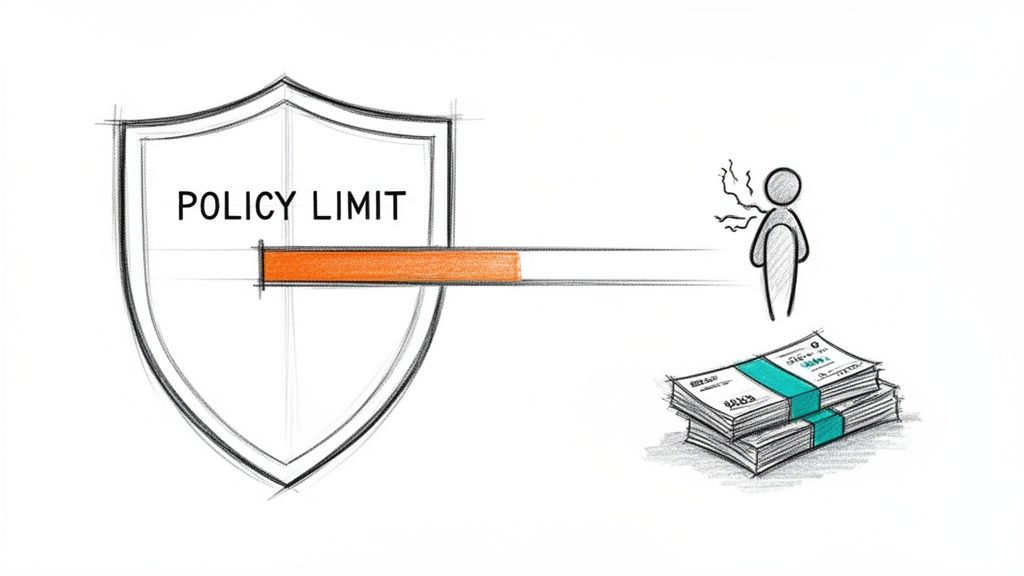
An insurance policy limits demand letter is a strategic tool used when your total damages are likely to exceed the at-fault party’s insurance coverage. This letter formally requests that the insurance company pay the maximum amount available under the policy. It is designed to persuade the adjuster that settling for the policy limit is a reasonable and prudent decision, given the high probability that a jury would award a verdict far greater than the available coverage.
This type of demand presents a clear, data-supported argument that the value of your injuries, medical expenses, and suffering surpasses the policy cap. By doing so, you create a time-sensitive decision point for the insurer. In Texas, where minimum liability limits can be insufficient for serious injuries, this type of personal injury demand letter example is crucial for resolving a claim efficiently and protecting your rights to potentially pursue further action if the insurer fails to act reasonably.
Strategic Breakdown and Application
The power of a policy limits demand lies in its ability to frame the settlement as the insurer's best option. Instead of just listing your damages, you are demonstrating the significant financial risk the insurance company faces if the case proceeds to trial. This shifts the negotiation dynamic from haggling over individual bills to a stark choice between a guaranteed payout at the limit versus a potential runaway verdict.
- When to Use This Approach: This letter is appropriate for severe injury cases where your medical bills, lost wages, and pain and suffering clearly exceed the defendant's known policy limits. For instance, a case with a permanent spinal injury and a $100,000 policy limit would be a prime candidate for this strategy.
- Why It Works: It puts pressure on the insurance company to evaluate its exposure realistically. By presenting compelling evidence that a jury award would likely exceed the policy, you create a scenario where rejecting the demand could be seen as acting in bad faith. A well-supported demand, backed by data, gives the adjuster the justification needed to pay the full policy value without protracted litigation.
Actionable Tips for Implementation
To execute an effective policy limits demand, your focus must be on irrefutably demonstrating that your claim's value eclipses the available insurance coverage.
- Establish Overwhelming Value: Your narrative should concentrate on the most severe aspects of your claim: permanency of injury, significant pain and suffering, and extensive future medical needs. The goal is to make it undeniable that your damages far outstrip the policy limit.
- Leverage Comparative Verdict Data: Use a platform like Verdictly to find 8-12 comparable jury verdicts from the relevant Texas county (e.g., Dallas, Harris, Tarrant). Present these cases in a simple table showing that juries consistently award amounts far greater than the policy limit for similar injuries. This data-driven approach is more persuasive than opinion alone.
- Set a Firm Deadline: State a clear and reasonable deadline for the insurance company to accept your demand, typically 20 to 30 days. This creates urgency and establishes a formal timeline for their decision, which is a key element in preserving any potential future claims against the insurer.
- Focus on Facts, Not Threats: Present your case logically and let the evidence speak for itself. Avoid aggressive language or direct accusations of "bad faith." The implication of their risk is more powerful when it arises from the facts you present, such as the severity of the injury and the data from comparable verdicts, rather than from explicit threats.
Personal Injury Demand Letters: 6-Point Comparison
| Template | Implementation Complexity 🔄 | Resource Requirements 📊 | Expected Outcomes ⭐ | Ideal Use Cases 💡 | Key Advantages ⚡ |
|---|---|---|---|---|---|
| Motor Vehicle Accident Demand Letter with Medical Documentation | High — detailed medical chronology and provider integration 🔄 | Extensive medical records, imaging, billing, provider statements; Verdictly comparables | High — strengthens causation and settlement position ⭐ | Injured motorists with documented treatment and clear causation | Improves credibility; clarifies past/future medical costs; speeds adjuster assessment |
| Lost Wages and Economic Damages Demand Letter | Medium — requires accurate income reconstruction and calculations 🔄 | Pay stubs, tax returns, employer letters, receipts, vocational reports | Strong — objective, easily verifiable economic recovery ⭐ | Employed or self‑employed claimants with quantifiable income loss | Provides concrete negotiation leverage; reduces disputes over amounts |
| Pain, Suffering, and Non‑Economic Damages Demand Letter | Medium–High — narrative crafting plus corroboration needed 🔄 | Medical notes on pain, therapy records, witness statements, psychological reports | Variable — can substantially increase awards if well‑supported ⭐ | Cases with chronic pain, psychological impact, or significant lifestyle loss | Captures subjective harms; can notably raise overall settlement value |
| Comparative Verdict Analysis Demand Letter | High — requires research, statistical synthesis and citations 🔄 | Access to Verdictly/other databases, time for case selection, charts/tables | High — objective benchmarks increase credibility and persuasive power ⭐ | Data‑driven plaintiffs/attorneys seeking evidence‑based valuations | Removes speculation; demonstrates fair range with verifiable precedents |
| Pre‑Litigation Settlement Demand Letter with Reservation of Rights | Medium — careful legal drafting to preserve claims 🔄 | Damage calculations, supporting docs, comparables, attorney review | High — creates formal record and preserves litigation options ⭐ | Plaintiffs preparing for possible suit; cases with clear liability | Protects legal rights; creates urgency with deadlines; documents good‑faith negotiation |
| Insurance Policy Limits Demand Letter | Medium — balancing aggressive valuation with reasonableness 🔄 | Medical evidence of severity, comparables showing awards > limits, legal review | High — can prompt insurer to tender limits if credible ⭐ | Severe injuries where damages likely exceed defendant’s policy limits | Encourages tender of policy limits; reduces claimant exposure; leverages bad‑faith risk (carefully) |
Your Next Steps: From Information to Action
Navigating the aftermath of a personal injury can feel overwhelming, but a well-crafted demand letter is a powerful tool to reclaim control. Throughout this guide, we have deconstructed several distinct personal injury demand letter example scenarios, moving from theory to practical application. The goal was not just to show you what a letter looks like, but to reveal why certain strategies are effective in compelling a fair response from an insurance adjuster.
The examples provided, from detailing minor medical costs to articulating the profound loss in a wrongful death claim, share a common foundation. They are built on a bedrock of clear, organized, and irrefutable evidence. Mastering this process is more than an administrative task; it is the critical first step in advocating for your rightful compensation and holding negligent parties accountable.
Key Takeaways: Your Strategic Checklist
As you prepare to draft your own correspondence or evaluate one prepared on your behalf, keep these core principles at the forefront. They are the strategic pillars that support a successful pre-litigation negotiation.
- Evidence is Everything: A demand without proof is just a request. Your power comes from meticulously compiled documentation, including police reports, medical records, billing statements, wage loss verification, and expert reports. Each claim you make must be directly supported by an attached exhibit.
- Narrative Shapes Value: Facts tell part of the story, but the narrative of your pain, suffering, and life disruption brings your claim to life. Use clear, impactful language to explain how the accident has affected your daily existence, from physical limitations to emotional distress. This humanizes your claim beyond a simple calculation of bills.
- Clarity Defeats Ambiguity: Insurance adjusters review hundreds of claims. A confusing, disorganized, or rambling letter is easy to undervalue or set aside. Use headings, bullet points, and a logical flow to make your position and your demand crystal clear. The easier you make it for the adjuster to understand your case, the faster you can move toward a resolution.
- Data-Driven Demands Win Negotiations: Grounding your settlement demand in real-world data, like the Texas-specific verdict and settlement analytics we referenced, transforms your ask from a guess into an informed valuation. Citing comparable case outcomes demonstrates that you have done your research and are serious about receiving a fair figure.
From Knowledge to Resolution
Understanding the structure of a personal injury demand letter example is the first step, but true empowerment comes from applying that knowledge. Your journey toward a fair settlement begins with the disciplined effort of gathering your documents, structuring your argument, and articulating your losses with conviction. This letter is your opening statement, setting the tone for the entire negotiation process.
By presenting a professional, evidence-backed, and strategically sound demand, you significantly increase the likelihood of a reasonable and timely settlement offer. You shift the dynamic from being a passive victim to an active participant in your own recovery. This proactive approach not only facilitates a better financial outcome but also provides a sense of justice and closure, allowing you to focus on what truly matters: your health and your future.
Ready to anchor your demand in real-world data? Verdictly provides on-demand, AI-powered personal injury case analytics, drawing from millions of Texas court records to give you data-driven insights into case values. Arm yourself with the same level of information that insurance companies use and craft a demand letter based on what your case is truly worth by visiting Verdictly.
Related Posts
How to guide: how to negotiate with insurance adjuster
Learn how to negotiate with insurance adjuster effectively to maximize your settlement, protect your rights, and avoid common claim pitfalls.
How Much Can I Get From a Car Accident Settlement?
Wondering how much can I get from a car accident? This guide breaks down settlement factors, damages, and claim values to help you estimate your compensation.
Kinds of Negligence (kinds of negligence): How They Impact Your Injury Claim
Discover kinds of negligence in Texas personal injury cases and how they can impact your motor vehicle claim. Get clear guidance on your rights now.