
How to file a small claims case: A quick, practical guide
Discover how to file a small claims case with clear steps to prepare, file, and collect your judgment quickly.
Before you can file a small claims case in Texas, you’ll first need to confirm your dispute is under the $20,000 monetary limit. From there, you'll file a petition with the right Justice of the Peace (JP) court. The whole system is set up for everyday people to handle financial disagreements—like unpaid invoices or security deposit arguments—without the intimidating costs and complexity of a full-blown lawsuit.
Is Small Claims Court the Right Choice for Your Dispute?
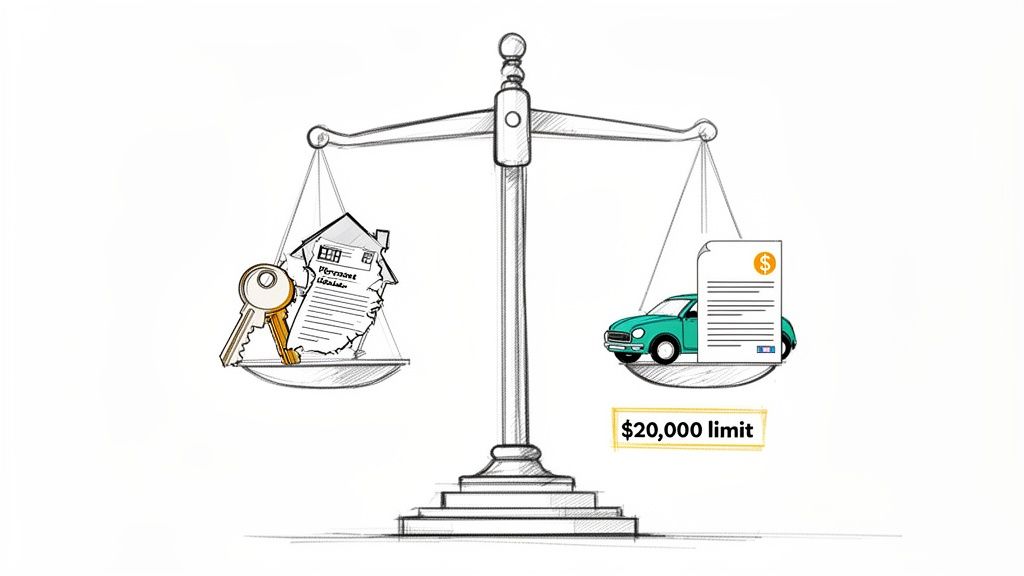
Before you jump into filling out forms, take a moment to figure out if small claims court is actually the right place for your problem. In Texas, we officially call it Justice Court, but you can think of it as "the people's court." It was created to offer a simpler, more affordable path to a legal resolution.
The process is intentionally less formal than what you'd find in higher courts. You don't need a law degree to navigate it, and the rules for evidence and procedure are much more relaxed. The main goal is to give regular citizens and small business owners a fair shot at justice without having to shell out thousands in legal fees.
Common Scenarios for Small Claims Court
So, what kinds of situations are a good fit? If your conflict boils down to a clear monetary loss that falls under the financial cap, you're probably in the right ballpark.
Here are a few classic examples I see all the time:
- Landlord/Tenant Disputes: Your old landlord is refusing to return your security deposit, even though you left the place spotless.
- Unpaid Debts: You're a freelancer, and a client has ghosted you on a final invoice for work you already delivered.
- Minor Property Damage: A neighbor's tree fell and crushed your fence, and they won't pay for the repairs.
- Faulty Services: A mechanic charged you a fortune for car repairs that didn't actually fix the problem.
- Breach of Contract: Someone backed out of a simple agreement—written or even verbal—that ended up costing you money.
Cases like these are exactly why the Justice Court system exists. It’s a popular way for people to settle disputes without the massive headache and expense of a traditional lawsuit.
Understanding the Texas Monetary Limit
This is the big one. The single most important rule is the amount of money involved. In Texas, the absolute maximum you can sue for in Justice Court is $20,000. It's important to know that this limit doesn't include any court costs or interest your claim might have earned.
Key Takeaway: If the amount you're owed is more than $20,000, you simply cannot file it in small claims. You also can't get clever and split a larger claim into two smaller ones just to squeak under the limit. You’ll either have to reduce what you're asking for to $20,000 or file your case in a higher court, like a County or District Court.
Choosing to go to a higher court is a serious decision. It means dealing with much more complex procedures, and you'll almost certainly need to hire an attorney, which sends costs and timelines skyrocketing. If you want a better sense of that world, check out our guide on how long a civil lawsuit can take. For most people, the speed and affordability of small claims court just makes more sense.
Here’s a quick-reference table to keep the key details straight.
Texas Small Claims Court at a Glance
| Attribute | Details for Texas |
|---|---|
| Official Court Name | Justice Court (often called JP Court) |
| Monetary Limit | $20,000 (excluding interest and court costs) |
| Who Can Sue? | Individuals, businesses (sole proprietorships, corporations, etc.) |
| Attorney Required? | No, you can represent yourself. |
| Common Case Types | Unpaid debts, contract breaches, property damage, landlord/tenant issues |
This table should give you a clear, at-a-glance idea of whether your case fits within the Texas small claims system.
Building a Winning Case Before You File
A strong case is built long before you ever set foot in a courtroom. People often think small claims is about dramatic arguments, but I’ve seen time and again that success really comes down to organized evidence. You need to think of yourself as a storyteller, and your documents, photos, and messages are the proof that makes your story believable to the judge.
This is your chance to build a clear, logical, and undeniable narrative of what happened. It’s about methodically gathering every piece of the puzzle. When you finally present your claim, it won't just be your word against theirs—it'll be your word backed by solid, undeniable facts.
Gather Every Relevant Document
First things first, start collecting every single piece of paperwork related to your dispute. This is the bedrock of your entire case. Forgetting one key document can seriously weaken your argument, so don't just grab the obvious stuff. Think through every single interaction you had with the other party.
Your evidence file needs to be airtight. I recommend including:
- Contracts and Agreements: This means signed contracts, written proposals, and even simple service agreements.
- Invoices and Receipts: Gather any unpaid invoices you sent out, plus receipts for repairs or replacement items you were forced to buy.
- Correspondence: Don't underestimate the power of written communication. Print out important email chains and take clear screenshots of text message conversations. They're fantastic for showing what was promised versus what was actually delivered.
- Photographs and Videos: Visual evidence is incredibly persuasive. A picture really is worth a thousand words, so take clear photos of property damage, shoddy work, or any other physical proof you have.
- Official Reports: If your case involves a car accident, the police report is essential. If you're in a dispute with a contractor, getting a report from a licensed building inspector can be a game-changer.
Once you have everything, organize it all chronologically. This simple step makes it so much easier for you to tell your story and, more importantly, for the judge to follow along.
Create a Clear Timeline of Events
With your documents in order, the next step is to create a simple timeline. This isn't just for you; it's a powerful tool to hand the judge. A clean, easy-to-read timeline can cut through the noise and explain a complicated situation in just a few minutes.
Start from the very first interaction you had with the defendant and list every key event with its date. For instance, if you're a freelancer chasing an unpaid invoice, your timeline might look something like this:
- January 15: Signed contract with Client X for web design services.
- February 28: Delivered the final website and sent the invoice for $3,500.
- March 15: Sent a polite follow-up email about the overdue invoice.
- April 1: Left a voicemail and sent a text; got no reply.
This simple list instantly transforms a frustrating dispute into a straightforward story of a broken promise. The judge can immediately see a clear pattern of non-payment.
A quick tip: Before you rush to file, it’s a smart move to send one last, formal request for payment. This is called a demand letter, and it shows the court you made a good-faith effort to resolve the issue out of court. If you need help structuring one, you can check out this helpful settlement demand letter example.
Identify Your Witnesses
Finally, think about who saw what happened. A credible witness can provide testimony that backs up your side of the story, and that can be incredibly powerful. This might be a passenger who was in your car during an accident or a neighbor who saw the defendant’s dog dig up your prize-winning roses.
Make a list of anyone who could be a potential witness and jot down their contact information. It's crucial to reach out to them beforehand to make sure they're actually willing to show up and testify for you. Having a witness who is ready and willing to speak in court adds serious weight to your claim and gives you the confidence you need to win.
Getting Your Case Officially Started: Filing and Service
Once you've done the prep work and gathered your evidence, it's time to make it official. This is where your dispute moves out of the he-said-she-said realm and into the justice system. The key document here is the Petition, which is simply the court's form for explaining who you are, who you're suing, and why.
But before you fill out a single line, you have to find the right courthouse. In Texas, small claims are handled by Justice of the Peace (JP) courts. Every county is split into different "precincts," and you have to file in the correct one. Usually, that’s the precinct where the defendant lives or where the problem actually happened. Don't guess on this—filing in the wrong JP court can get your case thrown out before it even gets a look.
Filling Out and Filing the Petition
The good news is that the petition form is designed for non-lawyers. It's mostly fill-in-the-blank. You’ll need the defendant's full name and current address, and a short, clear summary of what happened and how much money you're asking for. My best advice? Leave emotion out of it. Just state the facts as you laid them out in your timeline.
This is the point where all your preparation really pays off.
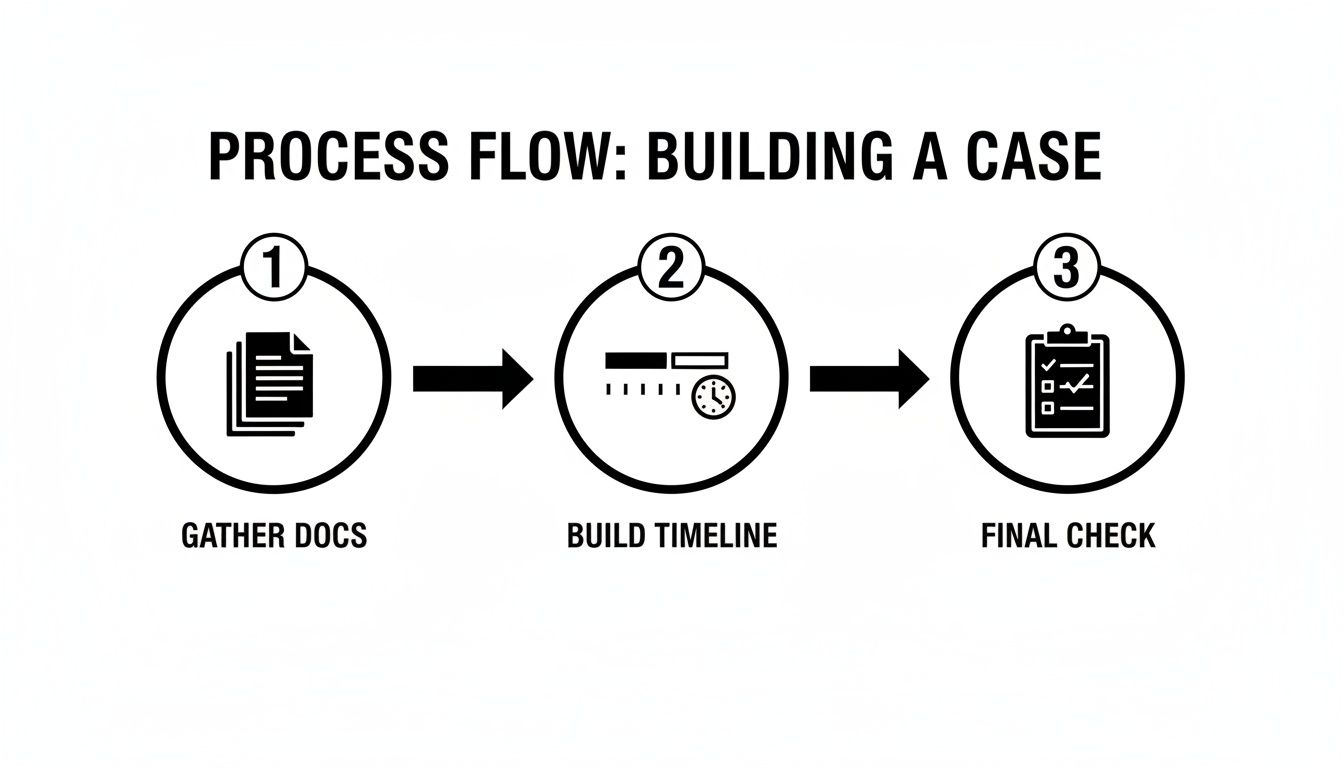
Following this simple workflow—get your documents, build your story, then double-check everything—makes sure your petition is solid from the get-go.
When the form is ready, you'll file it with the court clerk and pay the required fees. Expect this to be somewhere between $100 to $200, which covers the filing itself and the cost of having the papers served. If that fee is a genuine hardship, ask the clerk for a "Statement of Inability to Afford Payment of Court Costs." A judge will review it to see if you qualify to have the fees waived.
The Make-or-Break Step: Serving the Defendant
Your lawsuit isn't actually "live" until the other side has been legally notified. This is called service of process, and there's no way around it. You absolutely cannot just hand the papers to the defendant yourself.
Why Service is So Important: Proper service is a fundamental part of our legal system. It gives the defendant a fair chance to respond. A judge simply cannot hear your case, let alone grant a judgment, if you can't prove the defendant was properly notified of the lawsuit.
The court clerk will help you get this arranged, and you generally have two choices:
- Constable or Sheriff: This is the standard, most common option. A law enforcement officer from the JP court will personally deliver the lawsuit paperwork to the defendant.
- Private Process Server: You can also hire a certified professional to do the job. They can be more flexible and are often pros at finding people who are trying to avoid being served.
Getting service right is crucial. Before you file, it's smart to confirm the defendant's address and see if they have other legal issues. You can do this by searching public records. Our guide on how to perform a free Texas court records search is a great tool for this part of the process.
Once the defendant is served, the server files a document called a "Return of Service" with the court. That's the official proof, and it starts the clock for the defendant to file their answer.
What to Expect During Your Court Hearing
Walking into a courtroom for the first time is nerve-wracking for just about anyone. But take a deep breath—small claims court is designed for regular people, not high-powered attorneys. Success here isn't about memorizing legal jargon; it's about being prepared and communicating clearly. This hearing is where all your careful preparation finally pays off.
The whole process is more structured than a simple conversation but way less formal than what you see on TV. There's no jury, just you, the person you're suing (the defendant), and the judge, who in Texas is a Justice of the Peace.
The judge will call your case, swear everyone in, and then turn to you—the plaintiff—to start.
Presenting Your Case Clearly
This is your moment to tell the story. Address the judge directly, not the defendant. A calm, logical explanation is always more powerful than an emotional one. Use that timeline you put together to walk the judge through what happened, step by step.
When you mention a key piece of evidence, like the signed contract or that crucial text message, hand a copy to the judge and one to the defendant. Keep it simple.
Honestly, the most persuasive arguments are short and to the point. The judge really only needs answers to two questions:
- What was the deal or obligation?
- How did the other person break it, and what did that cost you financially?
Let your evidence speak for itself. Once you’re done, the defendant gets their turn. Your job is to listen, take notes for any follow-up points, and resist the urge to interrupt, no matter what they say.
The Role of Mediation
Before you even see the judge, don't be surprised if the court sends you to mediation. Many Texas Justice Courts require it. This is a much more informal sit-down with a neutral mediator who will try to help you and the defendant find some common ground and work out a deal.
Pro Tip: Take mediation seriously. This is your last real chance to have a say in the final outcome. Reaching a legally binding agreement here can save you the stress of a judge making the final call, which might not go your way.
Questions and Cross-Examination
After you've both told your stories, the judge might have some questions to clear things up. You'll likely also get a chance to ask the defendant questions, which is called cross-examination.
The key here is not to argue. Ask simple, factual questions. For example, instead of saying, "You never planned to pay me, did you?" ask, "Is it correct that the invoice due date was January 15th, and as of today, it has not been paid?"
Your preparation is everything. National court statistics consistently show that around 70% of plaintiffs who show up prepared win their small claims cases. The system is designed for you to succeed if you have your facts straight and present them well. You can even discover more insights about small claims outcomes to see just how much of a difference solid prep work makes.
How to Collect Your Money After You Win
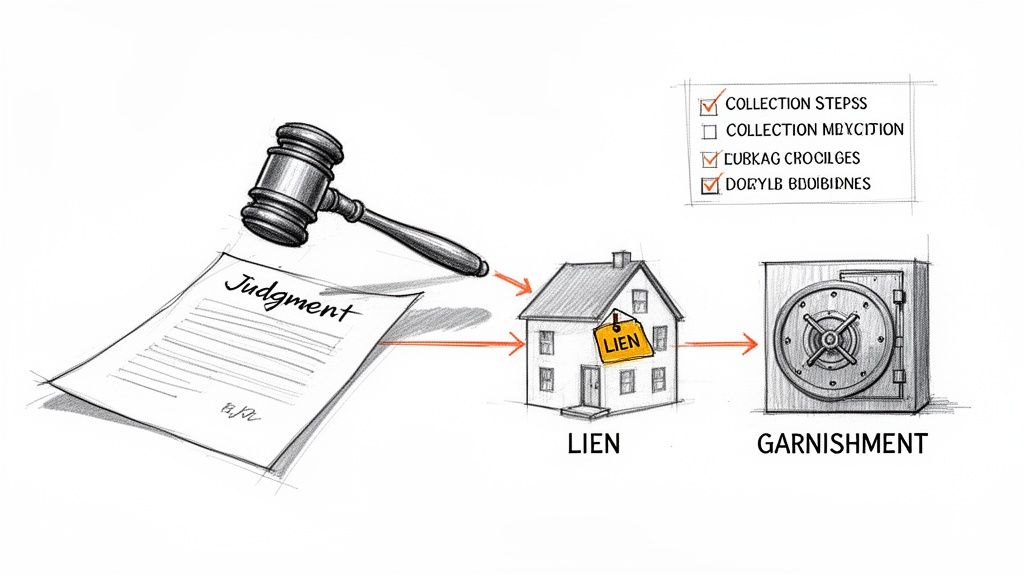
That feeling when the judge rules in your favor is incredible, but I've seen too many people celebrate prematurely. Winning your case is only half the battle. The court gives you a judgment—an official order saying you're owed money—but it won't act as your collection agent. Getting paid is now entirely up to you.
The unfortunate reality is that many defendants simply won't write you a check. If the person you sued ignores the court's order, your role shifts from plaintiff to creditor. It’s time to use the court's enforcement powers to legally compel them to pay up.
Turning Your Judgment Into Cash
Your first step after the judgment is signed should be a straightforward, professional request for payment. Send a formal letter that references the case and the amount owed, and ask them directly how they intend to settle the debt. If you get radio silence or an outright refusal, you’ll need to escalate.
The good news? A Texas judgment gives you some serious teeth. The key is to be persistent and use the right tools for the job. While each step involves more paperwork and some additional court fees, you can usually add these costs to the total amount the defendant owes you.
Here are the most common and effective tools for collecting a judgment in Texas:
-
Abstract of Judgment: This is a powerhouse move. You file an Abstract of Judgment with the county clerk, which places a public lien on any non-exempt real estate the defendant owns in that county. This is a huge problem for them, as they won't be able to sell or refinance the property without paying you off first.
-
Writ of Execution: Think of this as the court authorizing a sheriff or constable to go collect on your behalf. This writ allows them to seize the defendant's non-exempt assets—things like a second car, valuable collectibles, or business inventory—and sell them at a public auction to cover your judgment.
-
Writ of Garnishment: This is my personal favorite if you know where the defendant banks. A Writ of Garnishment is a court order sent directly to their bank, instructing them to freeze the account and hand over any available funds to satisfy your debt. It's often the quickest way to see your money.
Choosing the Right Collection Strategy
The best approach really depends on what you know about the defendant's financial situation. Do they own a house? The Abstract of Judgment is a fantastic long-term play. Do you know they have a regular paycheck and a bank account? A Writ of Garnishment is probably your fastest route to getting paid.
Don't get discouraged if the money doesn't come in right away. A Texas judgment is typically valid for 10 years, and you can even renew it for another 10. You have plenty of time to collect, so don't give up just because the defendant is difficult after you file a small claims case and win.
Patience is a virtue here. Enforcing a judgment takes a bit more legwork and a few more fees, but these are the necessary steps to turn that piece of paper from the court into actual money in your bank account.
Your Small Claims Questions Answered
Even after mapping out the process, you're bound to have some lingering questions. That's perfectly normal. While small claims is meant to be user-friendly, a few specific concerns almost always come up. Let's tackle the questions I hear most often from people just like you.
Do I Really Need to Hire a Lawyer?
The short answer is no. Texas Justice Courts are specifically set up so you can represent yourself—what the court calls going "pro se."
The rules are much more relaxed than what you see on TV dramas. The judge isn't looking for legal perfection; they are there to hear both sides of the story and make a fair call. You don't need to know fancy legal terms or complex procedures.
For most claims, the cost of hiring a lawyer would eat up a huge chunk of what you're trying to recover, which defeats the whole purpose. However, if your case is particularly messy or is pushing that $20,000 limit, paying an attorney for an hour of their time just to get some strategic advice can be money well spent.
What if the Person I'm Suing Doesn't Show Up?
It happens more often than you'd think. If you’ve properly served the defendant with the lawsuit papers and they don't appear at the hearing, you can request a default judgment.
Basically, this means you win by default. The judge will grant your claim because the other side didn't bother to show up and argue against it. You still need to be prepared to quickly walk the judge through your evidence to prove how much you're owed, but getting the win is pretty much a sure thing at that point.
Expert Tip: Don't get lazy just because the defendant is a no-show. Have your documents and a simple explanation ready. The judge still needs you to prove your damages before they'll sign the judgment.
Can I Fight the Judge's Decision if I Lose?
Yes, you can. In Texas, either side—plaintiff or defendant—can appeal a small claims decision. But you have to act fast. You must file the official appeal paperwork within 21 days from the date the judge signs the judgment.
Be warned: an appeal isn't just a do-over. It's a completely new trial, known as a "trial de novo," in the County Court. Everything starts from square one. You'll present all your evidence and arguments again, but this time in a more formal setting. Because it involves new fees and stricter rules, it’s a big step you should think about carefully.
What's the Real Cost to Get This Started?
The exact fees can differ slightly depending on the county (say, between Dallas and Tarrant), but you're looking at two main expenses to get the ball rolling:
- Filing Fee: This is what you pay the court clerk to officially start the case.
- Service Fee: This covers the cost of having a constable or sheriff officially deliver the lawsuit to the person you're suing.
All in, you should budget somewhere between $100 and $200 to get your small claims case filed and served. Here’s the best part: these costs are recoverable. When you win, make sure you ask the judge to add your court costs to the final judgment. It's your right, and it means the defendant has to pay you back for them.
At Verdictly, we believe that access to clear data is the first step toward a fair outcome. Our platform organizes years of Texas court records into an easy-to-use database, giving you real-world insights into motor vehicle case values and settlement ranges. While we are not a substitute for legal advice, we provide the information you need to negotiate from a position of strength. Explore real case outcomes and understand what your case could be worth at https://verdictly.co.